



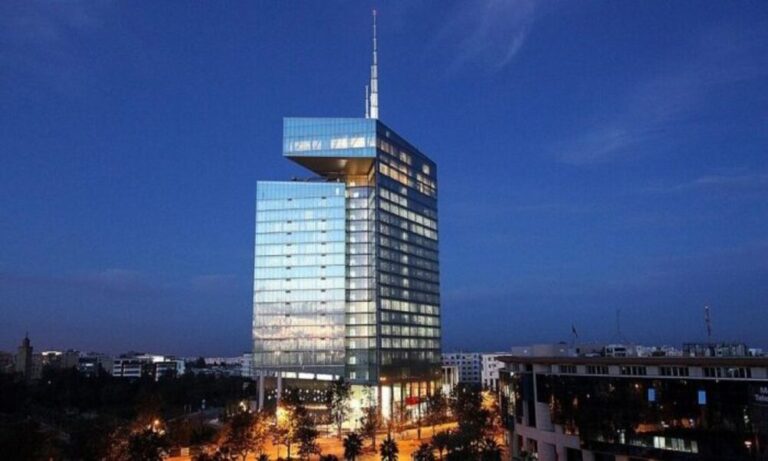
The Maroc Telecom Group reported a significant expansion of its footprint in 2025, reaching a global customer base of nearly 77 million subscribers.
This 3.6% year-on-year increase was largely propelled by the aggressive growth of its international Moov Africa subsidiaries, which saw a 5.1% rise in users. While the domestic Moroccan market remained stable at 22 million customers, the Group’s total revenue climbed to 36.7 billion dirhams (approximately €3.385 billion), representing a 1.4% increase over 2024. This financial performance reflects a strategic balance between the resilience of the Moroccan market and a 5.3% revenue jump from international operations.
In the Moroccan domestic market, the mobile subscriber base reached 19.2 million, supported by a fixed-line segment exceeding 1.6 million lines. However, the true engine of growth resided in the Moov Africa network, which now serves approximately 54 million mobile customers. Côte d’Ivoire leads the international portfolio with over 13.4 million subscribers, followed by substantial operations in Chad, Burkina Faso, and Mali. The Group also maintained a presence in the fixed-line and broadband sectors across several African nations, including Gabon and Mauritania, totaling 319,000 fixed broadband customers by the end of the year.
The fiscal year was defined by a heavy investment cycle, with capital expenditures representing 25.6% of revenue. These funds were primarily directed toward the landmark launch of 5G services in Morocco and the renewal of operating licenses across various African subsidiaries. While these investments led to an 11% decrease in net operating cash flow—reaching 8.02 billion dirhams—the Group successfully managed its debt levels, maintaining a consolidated net debt of 0.9 times its annual EBITDA. This disciplined financial approach allowed the company to sustain high margins despite the high costs associated with next-generation infrastructure.
Strategic milestones in 2025 included the resolution of the unbundling process through the creation of the UniFiber and UniTower joint ventures, which are expected to optimize infrastructure sharing and create long-term value. Maroc Telecom leadership emphasized that the year’s success was driven by digital transformation, innovation, and the rising demand for mobile broadband and Fiber-to-the-Home (FTTH) services. By closing the year in line with its financial objectives, the Group reinforced its position as a dominant telecommunications force capable of navigating a demanding macroeconomic environment across the continent.
AK/Sf/fss/abj/APA