





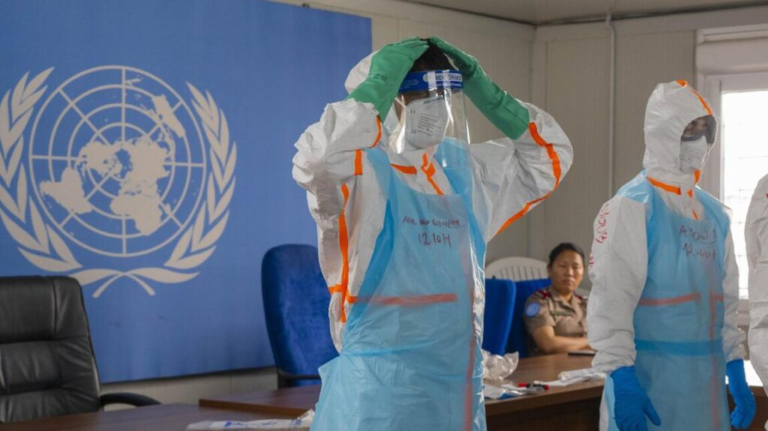
In response to the resurgence of the Ebola virus disease in the eastern Democratic Republic of Congo (DRC), MONUSCO and the World Health Organization (WHO) have trained around twenty healthcare professionals in Goma to enhance prevention, detection, and management capabilities for suspected cases.
The specialized training on infection prevention and control took place on June 16 and 17 in Goma, targeting personnel from the United Nations Organization Stabilization Mission in the Democratic Republic of the Congo (MONUSCO) amid a spike in Ebola cases across North Kivu and Ituri provinces. Organized by MONUSCO’s Infection Prevention and Control and Epidemic Preparedness Unit, in partnership with the WHO, the session was held at the Mission’s Level II+ Hospital, located at the Goma RVA site. The workshop successfully brought together doctors, nurses, ambulance drivers, and other staff members participating remotely.
According to Dr. Jacqueline Matowo, a physician at MONUSCO’s Level I Clinic, the initiative aimed to standardize operational procedures and update the knowledge of personnel required to intervene when a suspected case emerges. She explained that the training serves as both a refresher course and a capacity-building exercise, noting that healthcare workers must be able to rapidly identify suspected cases, protect themselves, and guarantee a safe environment for their patients. Participants received comprehensive training in triage and early screening, infection prevention and control, the proper use of personal protective equipment (PPE), and patient transfer protocols to specialized facilities.
Dr. Didier Mwecha, an infection prevention and control expert at the WHO, emphasized that the program focused heavily on practical skills crucial for containing a potential outbreak. He noted that they focused on standard precautions and specific measures tailored to the Ebola virus disease, with participants taking part in hands-on drills for the safe donning and doffing of protective gear, as well as the decontamination of surfaces and equipment. The expert also reminded that early symptoms of Ebola can easily be mistaken for other common illnesses such as malaria or typhoid fever, making early screening absolutely vital.
Although the last confirmed case in Goma has been declared cured, authorities warn against complacency. The areas of Beni and Butembo in northern North Kivu, along with the neighboring Ituri province, continue to record new cases, according to the WHO. Colonel Joyanta Borah, commander of the Indian Level II+ Hospital under MONUSCO, stressed the importance of collective mobilization against the health threat, stating that it would be a mistake to believe that the disease cannot reach Goma or MONUSCO facilities. He added that every staff member—whether a doctor, nurse, technician, or maintenance worker—must be familiar with and strictly apply safety protocols. Beyond medical staff, organizers are urging for increased public awareness and community-based surveillance to curb the risks of further transmission. Through this initiative, MONUSCO and the WHO reaffirm their commitment to supporting prevention and response efforts against Ebola in eastern DRC, where the threat persists despite progress made in the fight against the epidemic.
TE/Sf/lb/abj/APA