



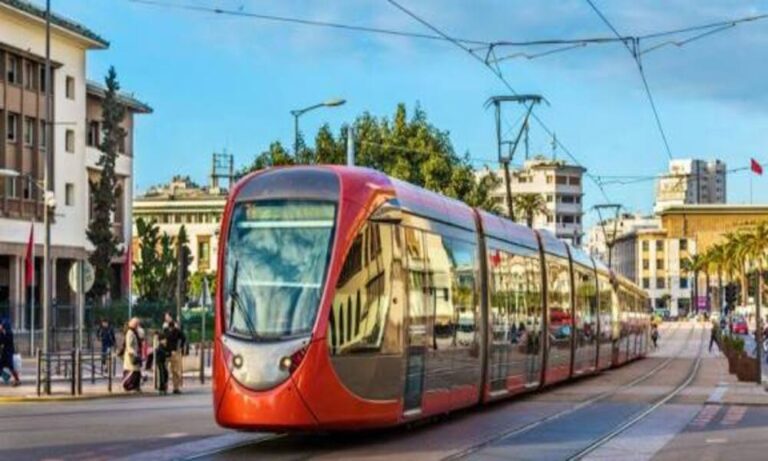
Morocco plans to invest over €7.1 billion by 2029 to develop a comprehensive clean and multimodal public transport system.
This ambitious investment was announced by Abdellatif Maâzouz, president of the Casablanca-Settat regional council, on the sidelines of COP30.
The substantial investment is strategically divided, with approximately €1 billion earmarked for the acquisition of 3,750 new-generation buses, and nearly €6.1 billion dedicated to core public transport infrastructure. This infrastructure includes trams, commuter rail, and regional trains.
This strategy underscores the increasing role of Moroccan regions in leading the country’s ecological transition, aligning with the framework of advanced regionalization.
Maâzouz emphasized that the Casablanca-Settat region is already spearheading this transformation, having committed over €2.3 billion—representing 40 percent of the budget of its updated Regional Development Plan—to urban and rural mobility infrastructure and equipment.
The region’s adopted transport model is based on a “non-polluting train-tramway duo as its backbone,” which is then reinforced by the modernization of bus services and a multimodal digital platform designed for intelligent traffic management.
Beyond the immediate infrastructure improvements, the expansion of urban, suburban, and rural road networks has also improved traffic flow and reduced emissions. According to monitoring stations in the region, a significant improvement in air quality was observed between 2023 and 2025, a result attributed to the expansion of public transportation and the gradual shift away from private car use.
Maâzouz noted that these advances reflect Morocco’s commitment to consolidating its continental leadership in sustainable development. The Kingdom intends to share this expertise with other African countries through South-South cooperation, particularly at the regional and territorial levels.
Ultimately, these investments are directly linked to the National Charter for Sustainable Mobility 2035 and the National Low Carbon Strategy 2030. These frameworks aim to build inclusive, competitive, and resilient territories where clean mobility serves as a major lever for attractiveness and quality of life.
MK/ak/fss/abj/APA