





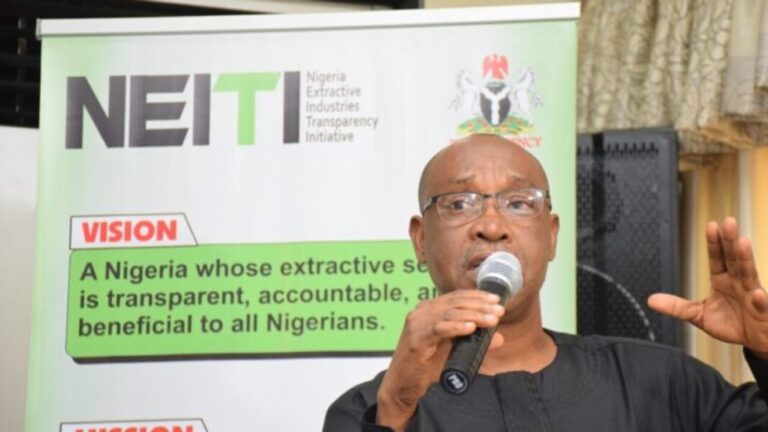
The Nigeria Extractive Industries Transparency Initiative (NEITI) has issued a policy-backed caution on what it describes as a “silent fiscal emergency” quietly undermining the economic stability of Nigeria’s states.
The agency on Sunday also raised an alarm, warning that rising debt servicing obligations are squeezing states’ capacity to provide essential services, invest in local infrastructure, and implement poverty reduction programmes. NEITI’s Director of Communication and Stakeholder Management, Obiageli Onuorah, disclosed this in a statement issued in Abuja.
According to local media reports, this alert follows the release of NEITI’s latest Policy Brief, “Beyond Federal Allocations: The Cost of Borrowings and Debt Servicing at the State Level in Nigeria,” in Abuja.
“Fresh and evidence-based insights by NEITI have revealed how debt servicing obligations are constraining states’ capacity to fund essential services, local infrastructure, and poverty reduction initiatives,” the statement from NEITI said.
NEITI explained that the decision to undertake this research is rooted in its statutory mandate under the NEITI Act 2007 and in line with global EITI Standards, which require disclosures on revenue allocations and subnational transfers. States in Nigeria receive substantial monthly allocations from the Federation Account, much of it derived from extractive revenues.
However, when between 10 per cent and 30 per cent of these allocations are deducted at source for debt servicing, the fiscal space for grassroots infrastructure, social services, and poverty alleviation is severely diminished. By shedding light on the scale and implications of these deductions, NEITI is providing citizens, policymakers, and development partners with reliable evidence to drive fiscal discipline and prudent debt management.
The organisation further noted that the study addresses a critical governance gap by complementing national debt management reforms with robust subnational fiscal transparency. High and unsustainable debt servicing obligations pose risks to state-level stability and undermine the developmental impact of extractive revenues.
Through this disclosure, NEITI empowers citizens, civil society, and the media to hold state governments accountable for their borrowing decisions, while providing a credible, evidence-based platform for dialogue on debt sustainability thresholds, transparent loan agreements, and responsible economic governance.
The Policy Brief reveals that between 10 per cent and 30 per cent of monthly FAAC allocations in many states are directly deducted at source for debt servicing, leaving less room for grassroots development investment.
GIK/APA