The Federal Government of Nigeria has said r that 15.2 million Nigerian homes are structurally unsafe, highlighting a severe housing crisis across the country.
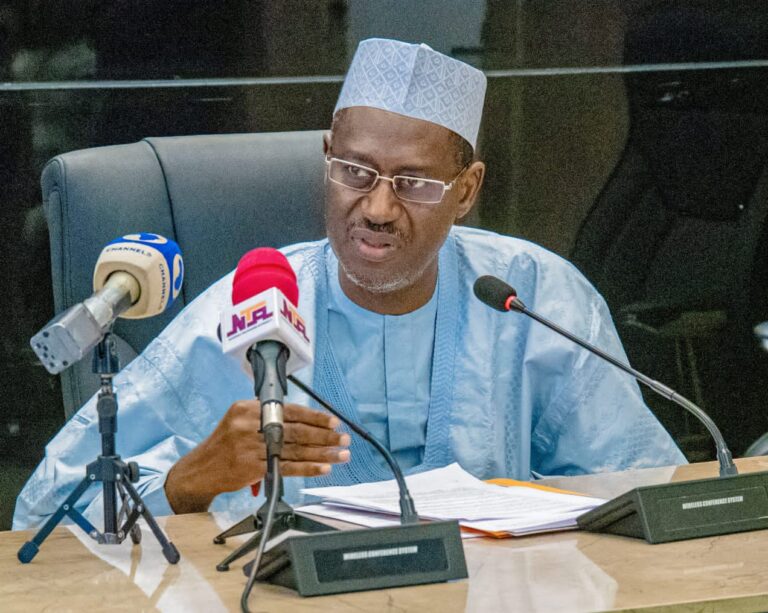
Nigeria’s Minister of Housing and Urban Development, Ahmed Dangiwa, said in a post on the Ministry’s X handle that the findings were recorded in the presentation of the National Housing Data Initiative by the National Housing Data Technical Committee in Abuja.
According to the Ministry, Kano State recorded the highest number of inadequate housing units, while Bayelsa State had the lowest, underscoring regional disparities in housing quality across the country.
He noted that the findings confirm that Nigeria’s housing challenge is both quantitative and qualitative, with national housing deficit estimates varying depending on data sources and methodological approaches.
“Beyond headline deficit figures, the application of harmonised and internationally recognised methodologies now allows us to state with clarity and confidence that Nigeria currently faces a housing inadequacy problem affecting approximately 15.2 million housing units nationwide.
“The 15.2 million inadequate housing units are homes that exist physically but fall below acceptable standards of safety, habitability, access to basic services, infrastructure, and durability.
The findings were derived from the application of the Household Crowding Index, the Adequate Housing Index, and a Composite Index Methodology, supported by datasets from the National Population Commission, the National Bureau of Statistics, the Central Bank of Nigeria, and other housing sector institutions.”
The Committee was established in August 2024 to develop a harmonised national framework for housing data to support evidence-based housing policy, planning, and investment.
“These findings clearly demonstrate that Nigeria’s housing challenge is not only about building new houses but equally about upgrading existing housing stock, regenerating deteriorated neighbourhoods, improving basic services and infrastructure, and ensuring dignity, safety, and adequacy in housing outcomes,” he added.
While highlighting the importance of the findings, the minister emphasised that housing inadequacy represents only one dimension of Nigeria’s broader housing deficit.
He stressed the need to sustain the same level of analytical clarity across other critical areas, including absolute housing shortages, affordability gaps, access to land and secure tenure, availability and cost of housing finance, infrastructure and service deficits, and regional and urban–rural disparities, as well as population growth rates, urbanisation trends, household formation patterns, and demographic projections.
According to him, a holistic examination of these dimensions is necessary to accurately assess current needs, anticipate future demand, and design sustainable and responsive housing policies.
The Minister formally accepted the presentation and report of the National Housing Data Initiative on behalf of the Ministry, describing it as “a major intellectual, technical, and institutional milestone” in Nigeria’s housing and urban development reform journey.
He disclosed that the Federal Government has commenced steps to institutionalise housing data through the establishment of a National Housing Data Centre, which will be domiciled within the Ministry in the short term and institutionalised through a Special Purpose Vehicle or statutory framework in the longer term.
GIK/APA