





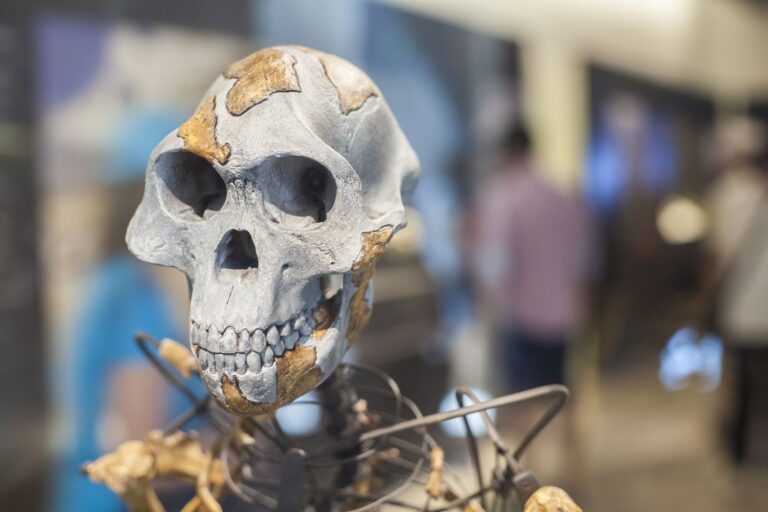
Ethiopia’s world-renowned hominid fossils, Lucy and Selam, have returned to Addis Ababa, concluding their successful two-month exhibition at the National Museum in Prague, Czech Republic.
Speaking at the welcoming ceremony on Wednesday, State Minister of Tourism Sleshi Girma said that during their 60-day exhibition in Prague, Lucy and Selam inspired countless visitors and strengthened Ethiopia’s profile as the true cradle of mankind – better known as the Land of Origins.
He noted that the exhibition served as a cultural bridge, reigniting international scientific and public interest in Ethiopia as the cradle of humankind and home to one of the world’s most ancient civilisations.
“By showcasing the country as the origin of humankind and a cradle of ancient civilisation, the exhibition successfully boosted the nation’s international image,” he said.
The Lucy and Selam exhibition, which opened on August 25, 2025, was one of the most visited in central Europe, underscoring the enduring global fascination with Ethiopia’s heritage and the country’s growing role in promoting shared human history through tourism and cultural diplomacy.
Lucy’s remains include fossilised dental fragments, skull pieces, and parts of the pelvis and femur.
Recognised for walking on two legs, Lucy is believed to have lived between the ages of 11 and 13, which is regarded as adulthood for her species.
Selam, the fossil of a baby Australopithecus discovered in the same region 25 years later, considerably older than Lucy at about 100,000 years.
Discovered in Ethiopia in 1974, the Australopithecus Afarensis remains of Lucy represented the most complete fossil find of its time, significantly enhancing the world’s understanding of human ancestry.
MG/as/APA