



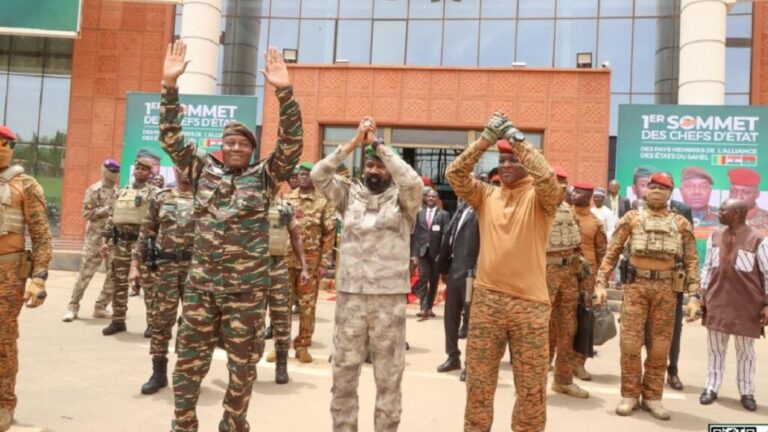
The second College of Heads of State of the Confederation of Sahel States (AES) officially opens this Tuesday, December 23, 2025, in Bamako.
The summit marks a critical milestone in the institutional structuring of the alliance between Mali, Burkina Faso, and Niger as they establish key bodies for regional self-reliance.
The start of the summit saw a slight shift in the diplomatic schedule as the three leaders prepared to meet: Early Arrival: Nigerien President Abdourahamane Tiani arrived in Bamako on Monday, December 22, where he was welcomed at the airport by Malian Transition President and current AES Chair, Assimi Goita. Schedule Shift: While initially expected on Monday, Burkinabe President Captain Ibrahim Traoré is now scheduled to arrive for the official opening on Tuesday morning. Program Reorganization: No official reason was given for the delay, but organizers have tightened the agenda to ensure all symbolic and institutional acts are performed by the three leaders together, maintaining the “confederal spirit” of the alliance.
The summit is centered on the activation of several common instruments designed to bypass traditional regional frameworks: The Unified Force: Following the presentation of its official flag on December 20, the College of Heads of State will formally authorize the command of this joint military body. Economic Sovereignty: The leaders are expected to move forward with the Confederal Bank for Investment and Development (BCID), a key financial pillar for the trio. Information & Media: The summit will feature presentations related to AES Television, the confederation’s dedicated media outlet.
The discussions in Bamako will focus on three primary pillars of cooperation: Security Coordination: Operationalizing the Unified Force to combat terrorism across shared borders. Political Integration: Strengthening the mechanisms of the newly formed Confederation. Institutional Handover: Facilitating the transition of leadership within the College of Heads of State and formalizing the governing bodies.
The authorities are treating this summit as a “crucial phase,” moving from political declarations to the concrete implementation of regional instruments that aim to redefine the geopolitical landscape of West Africa.
MD/Sf/fssabj//APA