





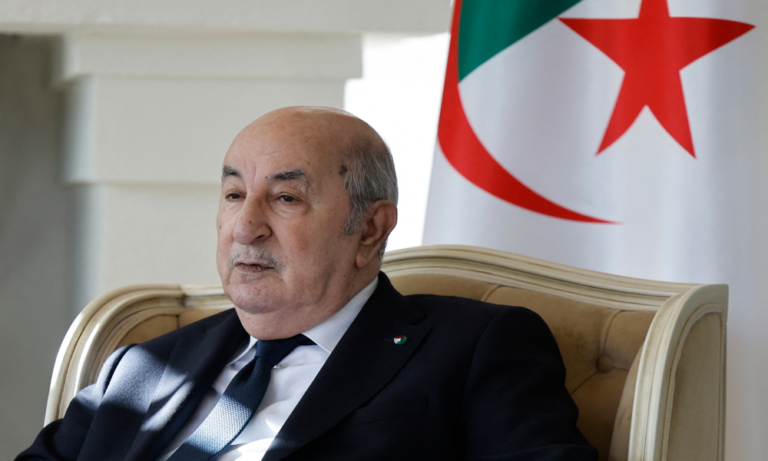
Algerian President Abdelmadjid Tebboune’s appeal urging nationals living abroad to return home in exchange for a pledge of “non-reoffending” continues to raise questions, as a leading human rights body argues that the initiative lacks concrete safeguards.
In a report published on February 21, the Cairo Institute for Human Rights Studies said the call lacks credibility in the absence of explicit legal mechanisms to protect those concerned. The organisation warned that returning without a clear legal framework could expose some exiles to prosecution or restrictive measures, rather than ensuring reintegration “in safety and dignity.”
The concerns come against the backdrop of legal proceedings and convictions against activists, journalists and opposition figures in absentia. The institute recalled that in 2024 it documented what it called the extensive use of national security and counterterrorism provisions to prosecute activities deemed peaceful, including public expression, civic engagement and the publication of critical analysis.
According to the NGO, this legal environment has fueled a climate of mistrust, particularly as official rhetoric has at times portrayed certain forms of opposition as external threats.
Several cases are cited to illustrate these concerns, including journalist Mustapha Bendjama, who was sentenced to prison; activist Mohamed Tadjadit, who remains in detention; and Nassera Dutour, a civil society figure reportedly prevented from entering the country. For the organisation, such cases highlight the gap between the stated objective of reconciliation and the current judicial reality.
In this context, the NGO is calling for specific measures, including protection against arbitrary arrest, a review of what it considers unjust convictions, and assurances that no citizen will be prosecuted for the peaceful exercise of fundamental rights. It also raised the possibility of an amnesty covering individuals convicted in connection with expression, assembly or trade union activities.
The presidential initiative, framed within the so-called “lem echaml” policy aimed at fostering national reconciliation, seeks to encourage the return of Algerians living abroad. However, the absence of detailed legal clarifications continues to fuel skepticism among a section of the Algerian diaspora, which is conditioning any potential return on tangible guarantees.
The divergence between political appeal and rule-of-law expectations underscores persistent tensions surrounding public freedoms in Algeria and, according to critical observers, the need for structural reforms to restore confidence.
MK/ak/lb/as/APA