



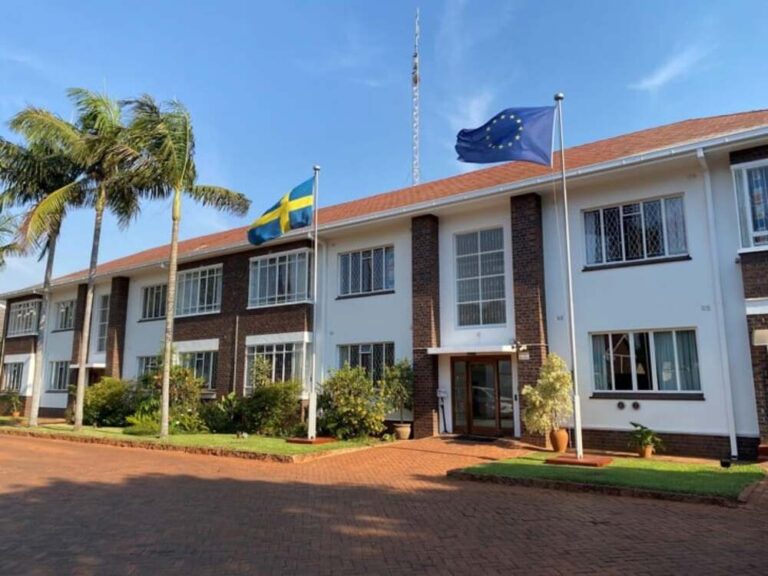
Sweden has announced it will phase out bilateral development cooperation with five countries – including Zimbabwe and Mozambique – by 31 August 2026, citing shifting foreign policy priorities and heightened security concerns in Europe.
The move will also see the closure of Sweden’s embassy in Zimbabwe, marking a significant change in diplomatic engagement with the southern African nation.
The Swedish government said the decision was part of a broader reform agenda to streamline aid strategies and respond to new defence challenges in Europe, particularly following Russia’s invasion of Ukraine.
“The decision responds to Sweden’s wider foreign policy priorities, including emerging security and defence challenges in our neighbourhood,” the embassy said in a statement.
“It is also connected to the implementation of the Swedish Government’s Reform Agenda for development cooperation, which aims to sharpen the focus of Sweden’s development cooperation and reduce the number of bilateral development cooperation strategies.”
Sweden recently abandoned its decades long neutrality and joined NATO alongside Finland.
In Harare, the embassy confirmed that the phase out is “not connected to any specific events or developments in Zimbabwe” but reflects Stockholm’s reorientation of aid.
Since the embassy’s primary mission has been tied to development cooperation, its closure will follow the end of bilateral programmes.
Sweden opened its embassy in Zimbabwe in 1980, shortly after the country’s independence, and has since been a significant development partner, supporting governance, democracy, climate and mining initiatives.
While bilateral aid will end, Sweden pledged to maintain ties through trade, investment, and multilateral channels, including EU programmes and UN agencies.
In Mozambique, the embassy in Maputo will remain open although bilateral aid will also be phased out.
Ambassador Andrés Jato described relations as “positive and long lasting,” noting Sweden’s contributions since 1975 amount to about US$2 billion.
Sweden is currently the fifth largest humanitarian donor to Mozambique and has supported sectors ranging from energy and climate to sexual and reproductive health, higher education and peacebuilding.
Humanitarian assistance will continue despite the reorientation.
Other countries affected by the latest decision are Tanzania, Liberia and Bolivia.
Sweden has already reduced aid to Mali and Burkina Faso, where military juntas aligned with Russia seized power.
JN/APA