





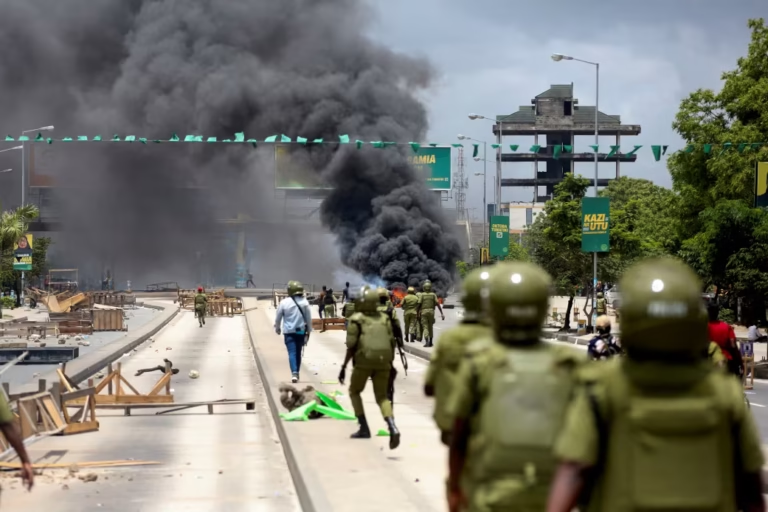
Tanzanian authorities have arrested opposition supporters and activists ahead of nationwide protests planned for Tuesday’s Independence Day, drawing condemnation from Human Rights Watch (HRW) that described the crackdown as unlawful.
The protests, set for December 9 (D9), were called by activists to highlight alleged police brutality and lethal force during the October 29 general elections.
President Samia Suluhu Hassan cancelled official Independence Day celebrations, redirecting funds to repair infrastructure damaged in the unrest but opposition groups vowed to proceed with demonstrations.
Since mid‑November, police have confirmed the arrest of at least 10 activists and Chadema opposition supporters, many accused of incitement or “online offenses” linked to social media calls for protests.
Detainees include Ambrose Leonce Dede, accused of organising demonstrations via WhatsApp; hospital worker Kibaba Furaha Michael, held for posts in a doctors’ union group; and teacher Clemence Mwandambo, charged with circulating “provocative” messages online.
Others, including Chadema district chairperson Victoria Swebe, were reported missing before police confirmed their detention.
Human Rights Watch said the arrests, abductions and digital surveillance reflect an “alarming climate of fear” designed to deter dissent.
“The Tanzanian government is building on the alarming climate of fear that prevailed prior to the elections to deter further protests,” HRW senior Africa researcher Oryem Nyeko said.
“The authorities should end their crackdown and respect the right of Tanzanians to peacefully express their views.”
Police have raided civil society offices, confiscated equipment and warned citizens against joining online groups promoting protests.
Meta confirmed restricting Tanzanian accounts after government requests while the US embassy cautioned its citizens about searches of electronic devices.
Regional and global bodies have raised concerns about extrajudicial killings, enforced disappearances and arbitrary detentions since the elections.
The government has formed a commission to investigate post‑election unrest but critics note it excludes civil society and opposition voices.
HRW urged authorities to release those detained and respect Tanzanians’ rights to peaceful assembly.
“Anything short of this will be a disservice to the many victims and to all Tanzanians’ fundamental rights” Nyeko said.
JN/APA