





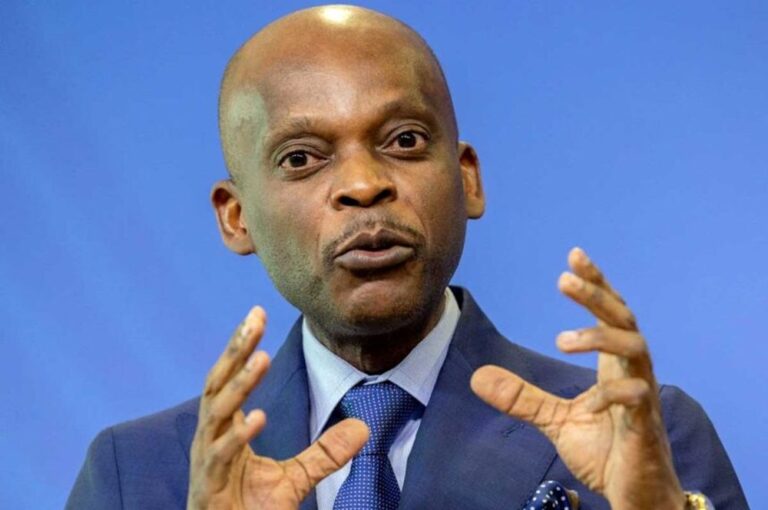
Togo’s Foreign Minister Robert Dussey is stressing the need to move beyond purely security-based responses to terrorism, in a message relayed by his Malian counterpart, Abdoulaye Diop.
Mr. Robert Dussey on Monday emphasised the importance of a comprehensive approach to combating terrorism in West Africa and the Sahel.
In a message posted on his social media accounts seen by APA and in which he mentioned his Malian counterpart, Abdoulaye Diop, the Togolese minister stated that “the fight against terrorism and the pursuit of peace cannot be limited to purely military or security responses.”
He stressed that these challenges “also require strengthening socio-economic integration mechanisms,” highlighting the structural causes of security crises in the region.
Mr. Dussey thus advocated for a combined approach based on “institutional stability, social inclusion, and shared development,” which he considers essential for building lasting peace.
The message was relayed by Malian Foreign Minister Abdoulaye Diop, reflecting a convergence of views on the need to broaden responses to insecurity in the Sahel.
This stance follows recent statements by the Togolese Foreign Minister on the subject.
At the end of March, he had already warned of the risks of destabilising the Confederation of Sahel States (CSA), believing that a weakening of the bloc – composed of Mali, Burkina Faso, and Niger -would have repercussions for the whole of West Africa.
“For Togo, regional peace and security cannot be fragmented. If the CSA falters today, the entire region will be threatened,” he declared, defending the principle of “indivisible” security.
These positions come amid intensified diplomatic efforts to maintain security dialogue in the Sahel.
The African Union Special Representative for Mali and the Sahel, Mamadou Tangara made a flurry of recent consultations with regional stakeholders.
He notably met in Abuja with the head of the ECOWAS Commission, Omar Alieu Touray, before being received in Freetown by Sierra Leonean President Julius Maada Bio, who reaffirmed his commitment to constructive dialogue on security issues.
Prior to these meetings, a mission to Bamako facilitated discussions with the head of the political transition in Mali, Assimi Goïta, in the presence of Minister Abdoulaye Diop, regarding maintaining channels of dialogue with the Sahelian authorities.
The Sahel remains the global epicenter of terrorism, accounting for more than half of all deaths related to this scourge, compared to less than 1% in 2007.
While the Global Terrorism Initiative (GTI) 2026 notes a relative improvement by 2025, with a decrease in victims in several countries, notably Burkina Faso (-45%) and Mali (-42%), as well as a decline in attacks in Niger, the region remains the deadliest.
This is marked by the continued presence of jihadist groups such as JNIM and the Islamic State in the Sahel, active cross-borders, and structural weaknesses – weak territorial control, political
instability, abuses, and a lack of economic opportunities – that fuel recruitment.
Meanwhile, the strengthening of the Confederation of Sahel States aims to structure the military response, but this does not change the fact that the region is expected to remain the most affected in the world in 2026.
AC/Sf/fss/as/APA