





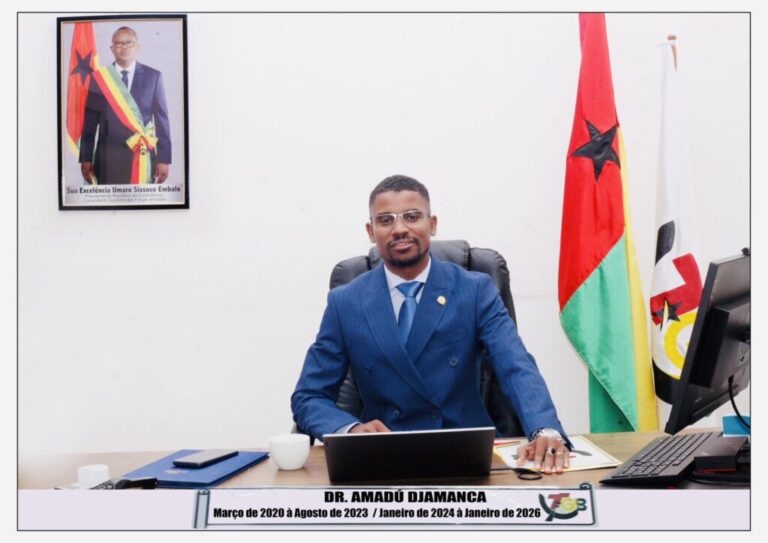
Amadú Djamanca, the Director General of Televisão da Guiné-Bissau (TGB), resigned on Tuesday, January 6, 2026, ending a five-year era of unprecedented modernization.
Despite elevating the country’s sole television station to international standards, Djamanca cited a “paradoxical” and unsustainable lack of government funding as the primary reason for his departure.
Appointed twice since 2020, Djamanca is credited with steering TGB through its most significant technological leap since its founding in 1989. Under his leadership, the station expanded to national coverage, secured a spot on the Canal+ satellite bouquet, and successfully transitioned to High Definition (HD) in late 2024. His tenure effectively shifted TGB from a station dependent on Portuguese and Senegalese equipment to one capable of self-sufficient production.
In a candid farewell statement, however, Djamanca warned that the station’s future is in jeopardy. He revealed that TGB remains “the only state-owned television station in the world without an operating budget or broadcasting tax revenue.” He emphasized that while the technical infrastructure is now in place, the broadcaster cannot produce quality content or open regional offices without guaranteed financial resources from the state.
The resignation comes at a time of political transition in Bissau. While Djamanca thanked former President Umaro Sissoco Embaló for his past support, the current transitional government—established following the recent military intervention by General Horta N’Tam—has yet to comment on the vacancy or address the funding crisis at the national broadcaster.
AC/fss/abj/;APA