



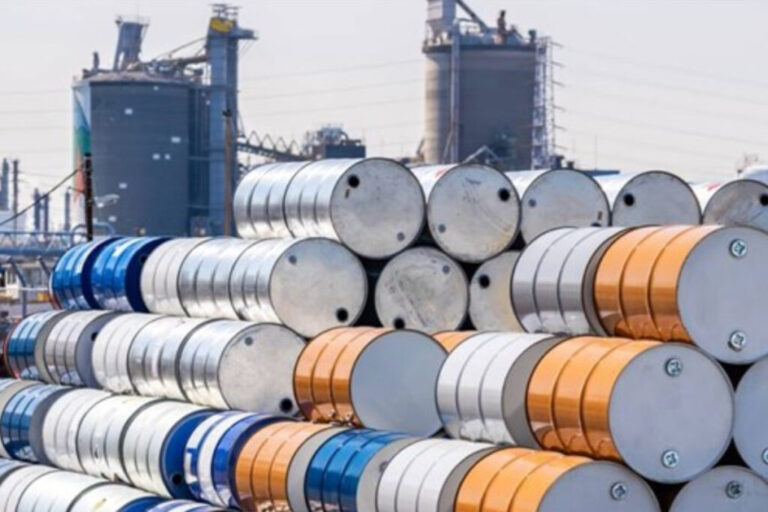
Tunisia’s crude oil production fell by 9 percent year-on-year, reaching 629 kilotons (kt) by the end of June 2025 compared with 692 kt a year earlier, according to the latest report from the National Observatory of Energy and Mines on the energy sector.
The decline affected most of the country’s main producing fields. Output at Nawara plunged by 54 percent, while production at Ashtart and El Hajeb/Guebiba was down 19 percent. The Barka and Gherib fields saw drops of 79 percent and 21 percent, respectively, while Halk el Manzel, Sidi Marzoug, Hasdrubal and Adam also recorded decreases ranging from 4 to 13 percent.
A few sites bucked the trend. Output at Ezzaouia rose by 83 percent, Gremda/El Ain surged 179 percent, and D.S.T increased 69 percent. M.L.D and Bir Ben Tartar also posted gains of 12 percent and 17 percent, respectively. Despite these localised improvements, average daily production slipped from 29,600 barrels per day at the end of June 2024 to 27,000 barrels per day a year later.
Meanwhile, domestic demand for petroleum products edged up by 1 percent between June 2024 and June 2025, reaching 2,248 kilotons of oil equivalent (ktoe). The increase was driven mainly by a 2 percent rise in gasoline demand, a 3 percent uptick in jet fuel, and a 3 percent gain in petroleum coke, used primarily in the cement industry. Diesel demand remained largely stable.
The consumption mix showed only slight changes. LPG rose from 17 to 18 percent of total demand, while fuel oil declined from 4 to 3 percent. Road fuels, which account for 63 percent of total demand, grew by 1 percent. LPG consumption saw a notable 8 percent year-on-year increase.
Petroleum coke use also grew by 3 percent by the end of June 2025 compared with the previous year, based on partial estimates. The observatory noted that this product, used exclusively by cement plants, can be substituted with natural gas or heavy fuel oil. Demand for jet fuel climbed 3 percent, reflecting a moderate recovery in air traffic.
MK/ac/lb/as/APA