



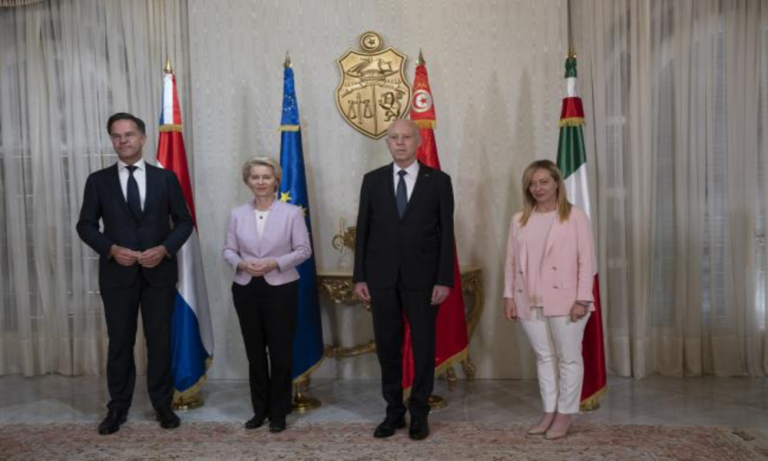
President Kais Saied is pushing for a fundamental recalibration of Tunisia’s relationship with the European Union, emphasizing national sovereignty and economic justice.
During a March 20, 2026, phone call with French President Emmanuel Macron—marking the 70th anniversary of Tunisian independence—Saied labeled the current partnership agreement “unfair” and called for a more balanced framework that reflects modern realities.
At the center of Saied’s agenda is the recovery of misappropriated funds and the revision of international agreements. However, these ambitions face significant hurdles, as the legal and political mechanisms for asset recovery in partner countries remain slow and unresponsive. Saied has also addressed the migration crisis, advocating for the voluntary return of irregular migrants while denouncing a global economic system he views as “unjust” for forcing Tunisia into a complex security role it did not initiate.
Beyond bilateral policy, Saied’s rhetoric has taken on a broader geopolitical tone, calling for a “new Enlightenment philosophy” and an end to international injustices, specifically regarding the Palestinian people. While this symbolic diplomacy projects a strong national stance, the path to tangible results remains uncertain. Ultimately, Tunisia’s desire to reaffirm its independence through a revised EU agreement highlights a recurring contrast between the country’s bold diplomatic assertions and its practical negotiating capacity on the global stage.
MK/AK/te/Sf/fss/abj/APA