



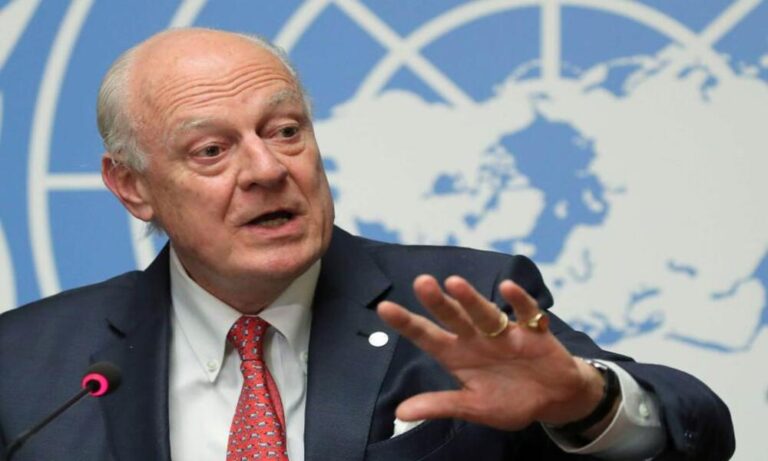
The UN Secretary‑General’s envoy for the Sahara, Staffan de Mistura, has begun a regional tour aimed at reviving stalled political talks as the United States signals its readiness to support faster progress toward a compromise‑based solution.
De Mistura visited the Tindouf camps on Monday before continuing his diplomatic tour to Algiers and then Rabat as part of preparations for upcoming deadlines regarding the Sahara issue before the UN Security Council.
The mission is part of the UN’s efforts to maintain momentum in the political process
towards a lasting solution to the regional dispute.
Prior to the trip, De Mistura met with Massad Boulos, Special Adviser to US President
Donald Trump on African and Arab Affairs at the Oslo Forum in Norway.
Following the meeting, the American official stressed the need to accelerate the implementation of Security Council Resolution 2797, which calls for renewed efforts to reach a “just, lasting and mutually acceptable” political solution.
In a message posted on the X network, Massad Boulos described the discussions as “productive,” stating that both sides had examined ways to support the political process led under the auspices of the United Nations.
For several years, Washington has considered the Moroccan autonomy initiative a credible and realistic basis for resolving the conflict.
De Mistura’s visit comes amid growing international support for the autonomy proposal presented by Morocco in 2007.
Several countries have recently reaffirmed their support for the initiative, believing it
offers a pragmatic framework that can foster a negotiated solution while guaranteeing regional stability.
According to observers, the discussions held in recent months demonstrate a growing willingness within the international community to encourage concrete progress before the Security Council’s deliberations in October on renewing the mandate of the United Nations Mission for the Referendum in Western Sahara.
The UN is now seeking to reconvene the various parties involved to explore ways to bridge their differences.
The diplomatic sequence comes as Morocco continues to benefit from strengthened international support for its autonomy initiative, which many international partners regularly describe as a serious, credible, and realistic solution to one of the region’s longest-standing disputes.
MK/AK/Sf/fss/jn/APA