



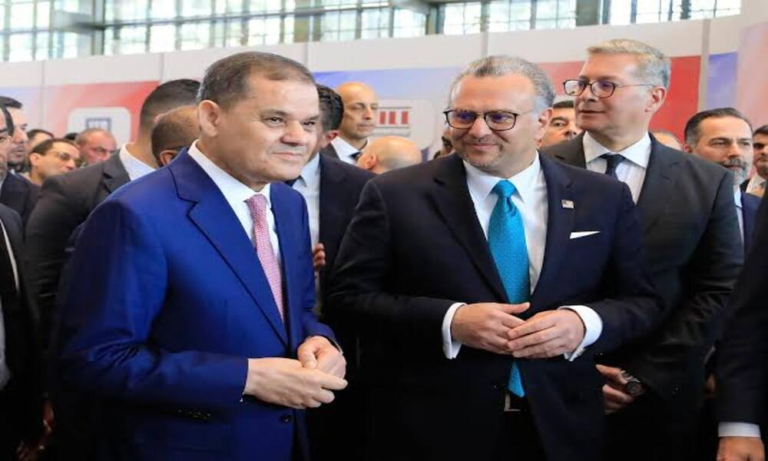
In a major diplomatic push to bridge the deep chasm dividing Libya, the United States has orchestrated a series of high-level, closed-door meetings in Malta between senior officials from the country’s rival eastern and western factions.
US President’s Senior Adviser for Arab and African Affairs, Massad Boulos, confirmed that the talks took place on July 6, 2026, under American auspices, with the explicit goal of accelerating the long-sought reunification of Libya’s fractured state institutions. Characterizing the discussions as highly constructive, Boulos emphasized that a unified Libya would unlock greater regional stability and prosperity while serving as a far more resilient security and economic partner for the international community, particularly Washington.
The strategic meetings in Valletta unfolded in two distinct, high-profile rounds designed to tackle the country’s delicate security and political paralysis. The initial round focused heavily on military architecture, bringing together Saddam Haftar—the son and influential representative of eastern military commander Khalifa Haftar—alongside the Tripoli-based Government of National Unity’s Deputy Defence Minister, Abdulsalam Al-Zoubi, and key members of the country’s Joint Military Commission. This was immediately followed by a political and security dialogue that united Saddam Haftar with GNU National Security Adviser Ibrahim Dbeibah and Minister of State for Communication and Political Affairs Walid Al-Lafi, marking a rare and significant convergence of Libya’s most powerful political heavyweights.
While the exact blueprint and granular details of the agenda were kept strictly confidential, international observers noted that the dialogue centered squarely on forging security cooperation, dismantling parallel military structures, and sustaining the broader, fragile political process. Sources close to the proceedings described the atmosphere as uniquely encouraging, indicating that the rival factions appear to be incrementally closing the gap toward an institutional agreement. However, negotiators also underscored the intense sensitivity of the ongoing talks, noting that the path to Libyan peace is historically volatile and that several previous high-stakes initiatives have collapsed at the finish line.
MK/AK/Sf/lb/abj/APA