





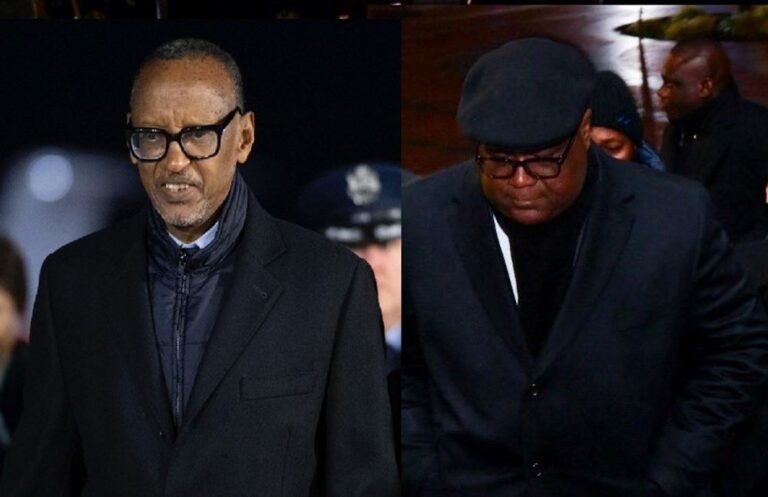
Washington is playing host to Thursday’s official signing of the peace agreement between the Democratic Republic of Congo (DRC) and Rwanda.
The landmark event takes place in the presence of U.S. President Donald Trump and several
African and Middle Eastern leaders.
This ceremony marks a major step toward stabilising eastern DRC and strengthening regional relations.
The official ceremony will take place at the United States Institute of Peace (USIP).
According to the State Department, ten heads of state or their representatives have confirmed their attendance, demonstrating the strategic importance of the initiative.
In addition to Donald Trump and the two signatories, Felix Tshisekedi and Paul Kagame, leaders or special envoys from Angola, Kenya, Togo, Uganda, Qatar, and the United Arab Emirates, as well as the Chairperson of the African Union Commission, are expected to attend.
Before the ceremony, scheduled between 4:00 and 4:10 PM GMT, Presidents Tshisekedi and Kagame will be briefly received at the White House for a trilateral meeting with President Trump.
No public statements are planned before the formal signing of the document at the USIP.
Upon arriving in Washington on Wednesday, Congolese President Felix-Antoine Tshisekedi reiterated that this agreement addresses the peace aspirations of the people of eastern Congo, particularly those of Goma, Bukavu, Rutshuru, Masisi, and Nyiragongo.
On the eve of the signing, Rwandan President Paul Kagame met with several Republican members of Congress to discuss bilateral relations and support for stabilisation efforts in the Great Lakes region.
Mandated by the African Union to lead regional mediation, Togo is represented by Faure Essozimna Gnassingbe, President of the Council.
Lomé emphasises that this initiative marks a decisive step towards a lasting African solution to the tensions in eastern DRC and reflects committed regional leadership.
The agreement, initialed on June 27 by the Congolese and Rwandan foreign ministers, will become legally binding after the presidential signature.
Washington describes it as an “international instrument” within a strategy built around three pillars: peace, partnerships, and prosperity.
AC/Sf/fss/as/APA