



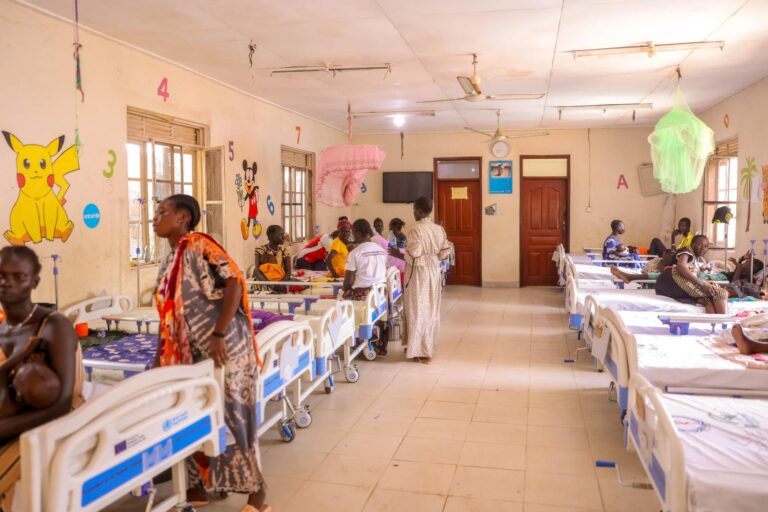
The World Health Organization has donated to Al Sabbah children hospital, the only tertiary referral children’s hospital in South Sudan.
The hospital runs a stabilisation center receiving children with severe acute malnutrition from all parts of the country.
WHO last weekend handed over pediatric beds, mattresses, oxygen concentrators, spare parts, severe acute malnutrition (SAM) kits and pulse oximeters to the management of Al Sabbah children hospital.
The medical supplies and equipment were procured with funding from the European Civil Protection and Humanitarian Aid Operations (ECHO).
The handover was an emotional moment for the personnel who often have more patients than beds and less supplies than they need to treat them.
As the only children’s hospital in South Sudan, there is a high demand for medical supplies and equipment for the facility to be able to tend to the one thousand children coming to the center each month.
Despite the stretch, Al Sabbah children hospital runs with slightly over 100 health workers and still manages to provide clinical training to students from both public and private institutions.
The nutrition team of the WHO in South Sudan has been a longstanding partner and advocate for the hospital to benefit from technical and logistical support in critical areas.
Dr Joseph Elias, the acting Executive Director of Al Sabbah said although the number of patients exceed the hospital’s capacity which affects the access to timely and quality healthcare, partners such as WHO continue to play an invaluable role in bridging the gap.
Betty Achan, a nutritionist at Al Sabbah children hospital stabilisation center for over a decade said the WHO’s donation came as a relief. ”We have so many children, and it is heartbreaking to tell a family that you have nowhere to put their sick child. Please go be our ambassadors and advocate more. We need more over everything because the demand is so high” said Betty.
South Sudan which has been mired in decades of conflict, faces many challenges, particularly in the health sector, and children are among the most vulnerable.
Dr Humphrey Karamagi, WHO Representative in South Sudan assured the hospital of continued support.
WN/as/APA