



The World Bank and the Tunisian government have announced a significant expansion of their climate resilience partnership, authorizing an additional $50 million in funding for the Integrated Disaster Resilience Program (ResCat).
This new injection of capital brings the program’s total budget to $175 million, up from the $125 million allocated at its inception in 2021. The expansion is specifically designed to extend urban flood protection infrastructure to three highly vulnerable regions: Tunis-West, Gabes, and Djerba.
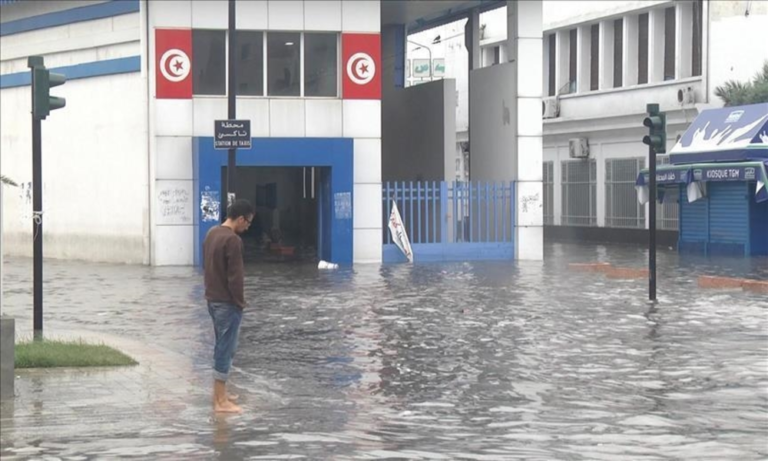
The decision to increase funding follows the severe climate events of January 2026, which saw the heaviest rainfall in Tunisia in over seven decades. The resulting widespread flooding caused major national disruption, underscoring the urgent necessity for more resilient infrastructure and improved early warning capabilities. Building upon the success of the initial program—which has already provided flood protection to nearly 170,000 residents in Bizerte, Monastir, and Nabeul—this new phase is expected to benefit more than 660,000 additional people, particularly those living in densely populated corridors and strategic economic hubs.
Beyond the construction of physical flood barriers, the funding will be used to modernize national hydrometeorological systems and enhance early warning networks. The program adopts an integrated strategy, combining infrastructure development with better data management and stronger disaster risk financing mechanisms. The World Bank emphasizes that these investments are vital not only for safety but for economic stability, as they aim to protect existing jobs, maintain ongoing business operations, and create new employment opportunities in the specialized sector of infrastructure operation and maintenance.
The initial ResCat program, which was co-financed by the World Bank and the French Development Agency, has already played a crucial role in strengthening the national institutions responsible for risk management. By deploying pilot warning systems and reinforcing urban defenses, the project has established a foundation that this new phase intends to scale up significantly. As Tunisia continues to face rising climate risks, this expanded partnership aims to provide a more comprehensive safety net for its most exposed populations and critical infrastructure.
MK/AK/te/fss/abj/APA