



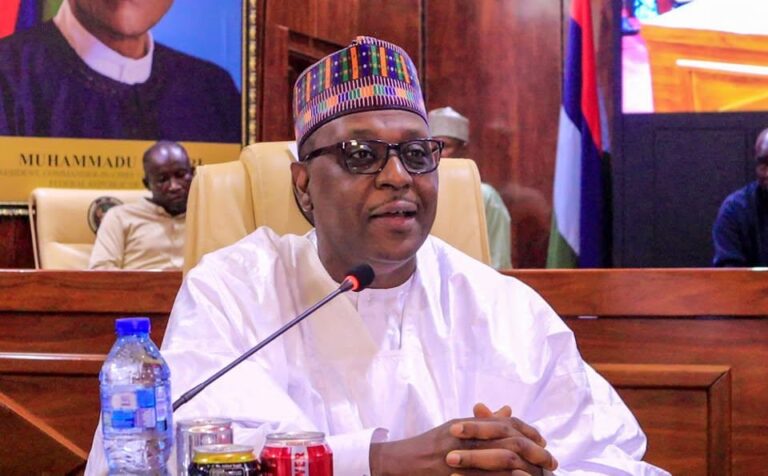
Nigeria’s Minister of Health and Social Welfare, Professor Muhammad Ali Pate, has warned that Nigeria’s human capital crisis is threatening the country’s long-term economic future.
Speaking at the Summit on Enhancing Human Capital Development in Northern Nigeria in Abuja on Wednesday, Pate disclosed that nearly 20 million children remain out of school while about 70 per cent of those enrolled cannot read and understand a simple passage by the age of 10.
He stated that decades of underinvestment in health and education have left the country with some of the world’s poorest human development indicators.
According to him, the situation is particularly severe in Northern Nigeria, where poverty, child malnutrition, maternal mortality and poor learning outcomes remain the highest.
The minister noted that about 65 per cent of Nigeria’s multidimensional poor population, about 86 million people, live in the North of Nigeria, while child stunting is highest in the North-West, where more than half of the children are affected.
He disclosed that maternal mortality, infant mortality and under-five mortality also remain unacceptably high despite recent improvements.
Prof. Pate stressed the need to invest in maternal health, child nutrition, early childhood development and quality education which are more critical to national prosperity than physical infrastructure alone.
“We often celebrate roads, bridges and airports, but the infrastructure that ultimately determines long-term prosperity is the infrastructure of the brain,” he said.
The minister explained that the first 1,000 days of a child’s life determine much of the brain’s development, warning that poor nutrition and inadequate stimulation during that period can permanently reduce a child’s learning ability and future productivity.
He said every child denied quality healthcare, education or nutrition represents not only a personal tragedy, but also a significant economic loss for Nigeria.
Pate warned that if current demographic trends continue, the economic gap between different parts of the country could widen considerably by 2050.
He explained that while Southern Nigeria has begun the demographic transition associated with lower fertility and improved productivity, much of Northern Nigeria continue to experience high dependency ratios that limit savings, investment and economic growth.
The minister stressed that Nigeria’s youthful population remains a potential advantage only if governments invest in keeping young people healthy, educated, skilled and productively employed.
He urged governments at all levels to prioritise human capital development, saying smart investments in education and healthcare could transform Northern Nigeria into the country’s biggest engine of economic growth.
GIK/APA