





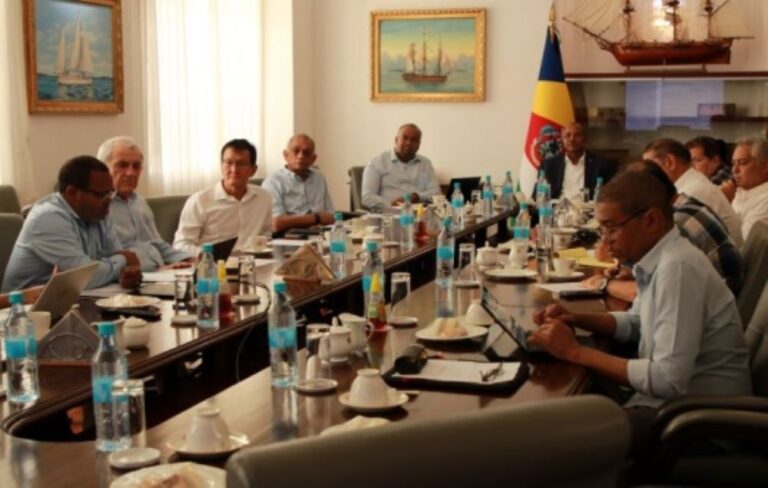
Agricultural development in Seychelles was the dominant theme as President Dr Patrick Herminie, chaired Wednesday’s third meeting of the Presidential Economic Advisory Council at State House.
The meeting continued the council’s strategic deliberations on the future of agriculture and its role in strengthening Seychelles’ food security, economic resilience and national well-being.
The meeting focussed on the policies and investments required to support a modern, productive and sustainable agriculture sector capable of meeting the country’s long-term development aspirations.
Members also considered the important interrelationship between agriculture, nutrition and public health, recognising that resilient food systems are fundamental to the health and quality of life of the Seychellois people.
The council was briefed on current developments within the agriculture sector, including ongoing initiatives to strengthen domestic production, enhance biosecurity, improve institutional coordination and reinforce technical support for farmers.
Deliberations centred on the structural priorities necessary to unlock the sector’s full potential. These included improving access to finance, strengthening water security and energy efficiency, investing in agricultural technology and innovation, developing local skills, enhancing market linkages, promoting value addition, and encouraging production models that are commercially viable, environmentally responsible and responsive to the evolving needs of the country.
Members also highlighted the importance of ensuring that research, innovation and technical expertise are translated into practical solutions that improve productivity, strengthen farmer resilience and support evidence-based policy development.
President Herminie reaffirmed that agriculture remains a strategic national priority and an essential pillar of Seychelles’ long-term development. He emphasised that building a resilient agriculture sector requires coordinated action across government, the private sector, financial institutions, research organisations and farming communities.
He underscored the importance of expanding access to finance, embracing technological innovation, improving resource efficiency, and creating an enabling environment that encourages investment, productivity and sustainable growth.
According to him, strengthening domestic agricultural production extends beyond food security.
It is equally an investment in public health, economic resilience and national self-reliance, ensuring that future generations benefit from a food system that is secure, sustainable and capable of withstanding external shocks, he said.
The meeting concluded with a shared commitment to advancing a coherent national approach to agricultural transformation, recognizing that sustained progress will depend on strong partnerships, innovation, strategic investment and policies that empower producers while safeguarding the country’s long-term food security and sustainable development objectives.
WN/as/APA