





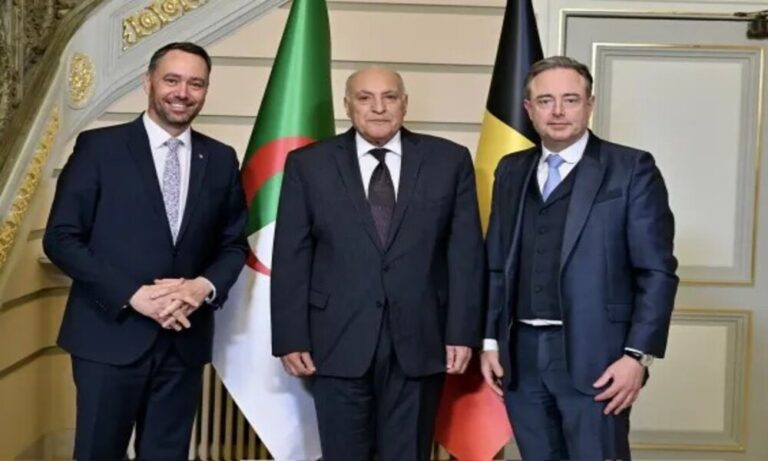
Recent diplomatic engagements by Algeria’s Foreign Minister, Ahmed Attaf, in Zagreb and Brussels suggest a significant strategic pivot, as the long-standing Sahara issue appears to have been sidelined in favor of economic pragmatism.
During his latest European tour, official discussions remained strictly focused on hydrocarbons and renewable energy cooperation. This absence is a notable departure from previous years, where the Sahara question served as a primary pillar of Algerian bilateral diplomacy.
This shift comes at a time when the European diplomatic landscape has become increasingly unfavorable to Algiers’ traditional position. In early 2026, Belgium reaffirmed its support for Morocco’s autonomy proposal as the most “credible and realistic” solution, following a similar endorsement from Croatia in April 2025. This growing consensus among EU member states appears to have narrowed Algeria’s room for maneuver, forcing a move away from diplomatic confrontations that have yielded diminishing returns.
The trend of de-emphasizing the dispute is also visible within Algiers itself. Recent high-level meetings with Serbian and Spanish officials notably avoided the topic, despite it being a historical flashpoint for tensions—particularly with Madrid. By focusing on “energy diplomacy,” Algeria seems to be adjusting to a geopolitical reality where its influence over the Sahara issue is waning in the face of evolving international dynamics.
Ultimately, the gradual transition toward pragmatic economic partnerships reflects a compelled adjustment to a shifting balance of power. As European nations align more closely with Morocco’s framework, Algerian diplomacy is increasingly tasked with maintaining regional relevance through economic utility rather than political deadlock.
MK/AK/te/Sf/lb/abj/APA