






The Algerian government is reviewing the regulation of foreign labor, revealing a persistent need for imported skills.
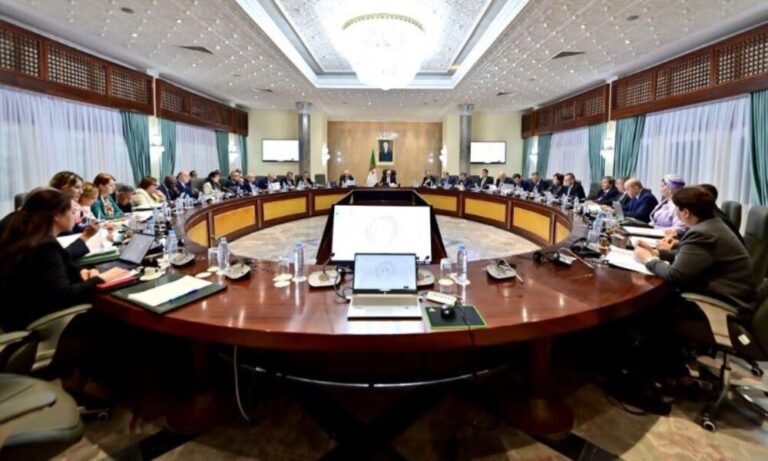
The Algerian government, during a meeting chaired by Prime Minister Sifi Ghrieb, examined a point dedicated to the employment of foreign workers, according to an official statement.
The government emphasises a legal framework aligned with International Labour Organization (ILO)
Convention No. 97, guaranteeing equal treatment between national and foreign workers.
This clarification comes in a context marked by the launch of investment and infrastructure projects requiring specific skills.
The report presented to the government underscores the need to adapt the regulatory framework to better regulate the use of this workforce.
At the same time, the authorities insist on the development of national skills, presented as a priority objective to support economic transformation. This dual approach reflects a balancing act between
openness to external expertise and a desire to reduce technical dependence.
This reliance on skilled foreign workers primarily concerns sectors deemed strategic, without any precise official data being published on their volume, sectoral distribution, or economic contribution.
The lack of detailed statistics limits the assessment of the true extent of the phenomenon, even though the need for specialised skills appears to persist in several industrial segments.
Following this meeting, the government also examined a draft decree concerning state funding for the increased reimbursement rate of certain social security benefits.
This text aims to regulate the financing of the difference related to these reimbursements for certain categories of insured individuals, although the associated budgetary amounts have not been disclosed.
All of these measures highlight a structural tension between industrial ambitions and the local availability of skills.
The legal framework governing foreign labor thus appears as a means of adjustment, pending a genuine strengthening of national human capital, the results of which remain to be documented.
MK/AK/Sf/fss/as/APA