



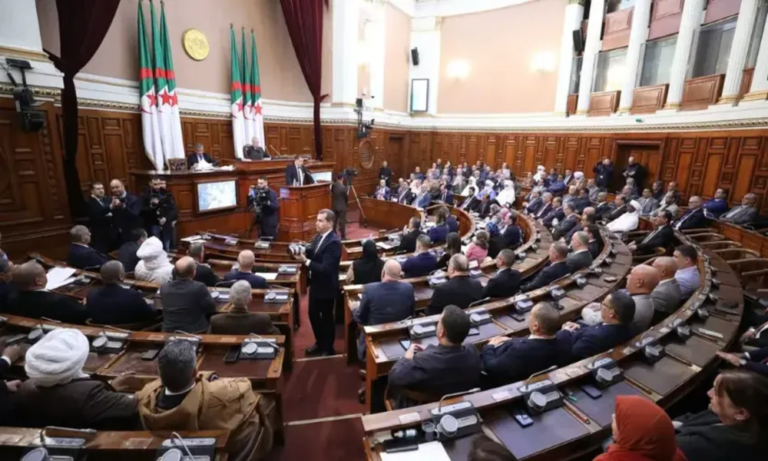
Joint parity committees in Algeria are set to begin deliberations to resolve formal disagreements between the National People’s Assembly and the Council of the Nation over amendments to the Highway Code and a draft law seeking to criminalize French colonization.
The two joint committees, formed by members of both chambers of the Algerian parliament, will meet to review provisions that have been the subject of formal dispute. The first session will address the draft bill on the Highway Code, while the second will focus on the proposed legislation criminalising French colonisation in Algeria. In accordance with Article 145 of the constitution, the committees are mandated to propose a compromise wording for the contested articles within a specified timeframe.
Recourse to this mechanism underscores the depth of the divisions. The Council of the Nation rejected eleven provisions of the Highway Code bill, notably those relating to increased fines and tougher penalties, including custodial sentences in cases of involuntary manslaughter. Behind these reservations lies a broader debate over striking a balance between the imperative of road safety and the proportionality of sanctions in a socially sensitive climate.
The draft law criminalising French colonisation has also triggered significant disagreement, with thirteen of its twenty-seven articles rejected by the upper house. Provisions concerning “reparations” and “apologies” are among the principal sticking points. The debate extends well beyond the legal sphere, touching on national memory, diplomatic relations and potential international ramifications. Incorporating such legislation into the domestic legal order raises questions regarding its normative scope and practical enforceability.
Under the constitutional framework, if the committees fail to reach a compromise, the government may request that the National People’s Assembly issue a final ruling. This provision effectively grants the lower chamber the last word, limiting in practice the institutional blocking power of the Council of the Nation. The process highlights Algeria’s parliamentary architecture and the implicit hierarchy between the two chambers.
Beyond procedural considerations, the two bills reflect distinct dimensions of public policy: one centered on day-to-day regulation and road safety, the other embedded in a broader memorial and political context. Their simultaneous consideration underscores the tension between pragmatic governance and the symbolic affirmation of historical positions.
MK/AK/Sf/lb/as/APA