



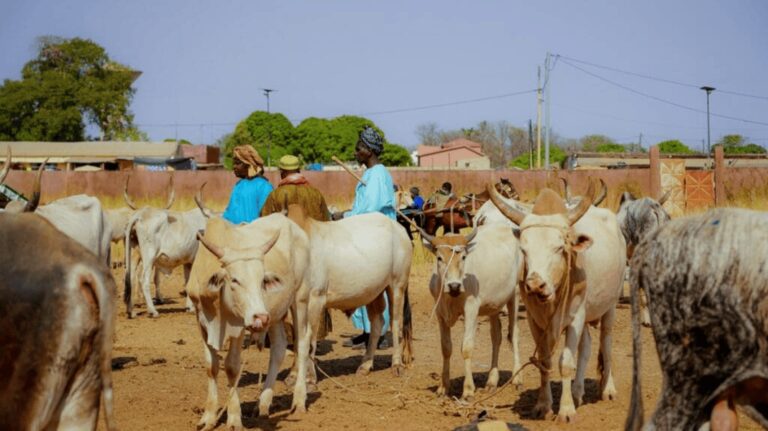
Kaolack, Senegal – Cattle theft has become a significant challenge for Senegal’s livestock sector, with a disturbing trend emerging: herders themselves are increasingly implicated in these crimes.
This internal betrayal, often with devastating consequences, not only undermines the livelihoods of individual herders but also hinders the development of the entire sector.
The bustling weekly market in Dinguiraye in the Nioro du Rip department provides a stark illustration of this problem. Amidst the vibrant scene of livestock trading, with herders negotiating prices and shepherds tending to their herds, the shadow of cattle theft looms large. Conversations with herders reveal a troubling reality: many thefts are not perpetrated by outsiders but by individuals within the herding community itself.
These acts of betrayal, often committed by trusted members of the community, erode trust and create an atmosphere of fear and suspicion among herders. The loss of livestock can have devastating financial consequences, pushing many herders into precarious economic situations.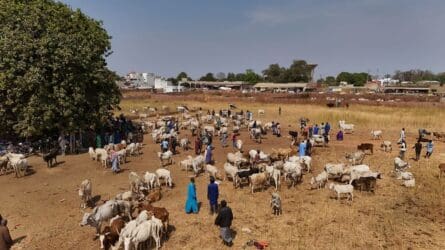
This issue demands immediate attention and a multifaceted approach to address the underlying causes and mitigate its impact on the livestock sector.
Devastating impact of internal betrayal
Aliou Ba, a local herder, recounts the devastating experience of having thirty oxen, including calves, stolen by a fellow villager. “He completely ruined me,” Aliou says, his voice heavy with anger, despite having gathered evidence against the thief, who remains unpunished despite owning more than 50 cows.
The stories of betrayal extend beyond Dinguiraye. Aliou Diallo, from the neighboring locality of Ndoffane, shared the harrowing experience of his own uncle stealing his two cows and their calves. Diallo, through painstaking efforts, managed to track down his stolen livestock.
In Ndramé Escale, a border town near The Gambia, the atmosphere at the weekly market quickly turns somber when the topic of cattle theft arises. El Hadj Mamadou Sow, president of the local Livestock Association, highlights the threat posed by itinerant herders who sometimes integrate stolen animals into their own herds.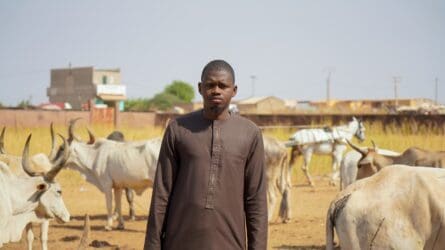
However, the most alarming trend is the involvement of herders within their own communities. As Aly Dicko, a representative of the Mauritanian herding community settled in Missirah Wadène, poignantly states, “Cattle theft is an internal problem. The thieves are often neighbors, and the population, complicit, refuses to denounce them.” Cheikhna Ba, coordinator of the communal committee for combating cattle theft in Ngainthe Pathé, echoes this sentiment, acknowledging that “We all know who the thieves are. They are among us.”
Dr. Ibrahima Thiam, an animal production specialist at the FAO Regional Office in Dakar, confirms this disturbing reality, emphasizing that cattle theft is primarily a local issue perpetrated by individuals within the herding communities themselves.
This internal betrayal poses a significant challenge to efforts to combat cattle theft in Senegal. Addressing this issue requires not only strengthening law enforcement but also fostering greater trust and cooperation within the herding communities and encouraging a culture of reporting these crimes.
A culture of silence hinders justice
A major obstacle to effective law enforcement is the reluctance of community members to report incidents involving family members or close acquaintances.
“The absence of a culture of denunciation among the population is the main obstacle to our efforts,” laments Abdoulaye Diop, sub-prefect of Ndiédieng in the Kaolack department. “Most people know who the culprits are but choose to remain silent.” This “code of silence,” deeply ingrained in rural communities where familial ties are strong, significantly hampers investigations and undermines efforts to bring perpetrators to justice.
Herders express frustration with the perceived lack of consequences for cattle thieves. “Our complaints never lead anywhere. A caught thief only spends a few days in prison. So why bother taking the case to court?” they ask, demanding harsher penalties to deter these crimes.
In an effort to address this issue, the Senegalese government passed a law criminalizing cattle theft in May 2017. However, the expected results have yet to materialize. The lack of effective enforcement and the prevailing culture of silence continue to hinder efforts to curb this pervasive problem.
Cattle theft devastates livelihoods and cripples rural economies
The economic impact of cattle theft in Senegal is far-reaching and devastating. Beyond the immediate financial losses suffered by individual herders, these crimes destabilize rural economies and threaten the livelihoods of countless families.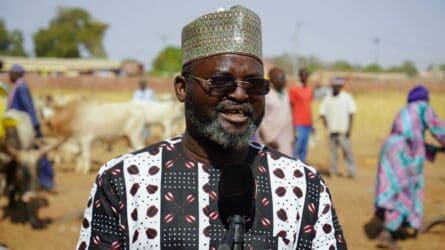
According to FAO data, Senegalese herders endure substantial financial losses due to cattle theft, estimated at $3.2 million (2 billion CFA francs) annually. The scale of the problem is significant, with an estimated 22,000 to 30,000 livestock (cattle, sheep, goats, and equines) stolen each year.
These losses have a ripple effect throughout the rural economy. Reduced livestock populations impact meat production, milk supply, and agricultural productivity, hindering food security and economic growth in rural communities.
“If we could put an end to this, in three to five years, we would no longer need to import livestock,” argues Demba Ba, president of the Mbirkilane Livestock Association in the Kaffrine region, highlighting the potential for increased domestic livestock production if cattle theft were effectively addressed.
The problem is even more alarming in the broader West African region. In Mali, between 2019 and 2022, a staggering 887,250 cattle and 446,000 small ruminants were stolen, amounting to losses of $6.4 million per year.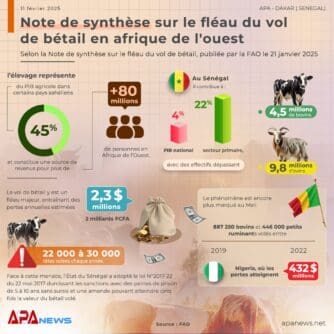
These staggering figures underscore the urgent need for concerted efforts to combat cattle theft and mitigate its devastating socio-economic consequences across the region.
Emerging solutions to combat cattle theft
The fight against cattle theft in Senegal is gaining momentum, with a multi-pronged approach emerging to address this critical issue.
The Food and Agriculture Organization (FAO) is committed to supporting Senegal by implementing seven key recommendations, including the formation of a sub-regional coalition against cattle theft and the utilization of innovative technologies for livestock tracking and prevention. These initiatives aim to enhance early warning systems, improve data collection, and facilitate rapid response mechanisms.
Grassroots organizations are also playing a crucial role. The National Association for the Fight Against Cattle Theft (ANLCVB), led by El Hadj Aboubacar Bitèye, has made significant progress since its inception in 2010, recovering 11,803 stolen cattle out of 21,430 reported cases.
Recognizing the urgency of the situation, the Senegalese government is taking decisive action. At a ministerial meeting on February 12, 2025, President Bassirou Diomaye Faye underscored the “urgent necessity” of enforcing preventive and punitive measures to effectively combat cattle theft. This includes strengthening legal frameworks, enhancing law enforcement capabilities, and increasing penalties for those involved in these crimes.
While challenges remain, these concerted efforts from international organizations, government agencies, and local communities offer a glimmer of hope for herders and the livestock sector in Senegal. By combining innovative technologies, community-based initiatives, and strengthened law enforcement, it is possible to effectively combat cattle theft and safeguard the livelihoods of those who depend on this vital sector.
ARD/sf/ac/lb/abj/APA