





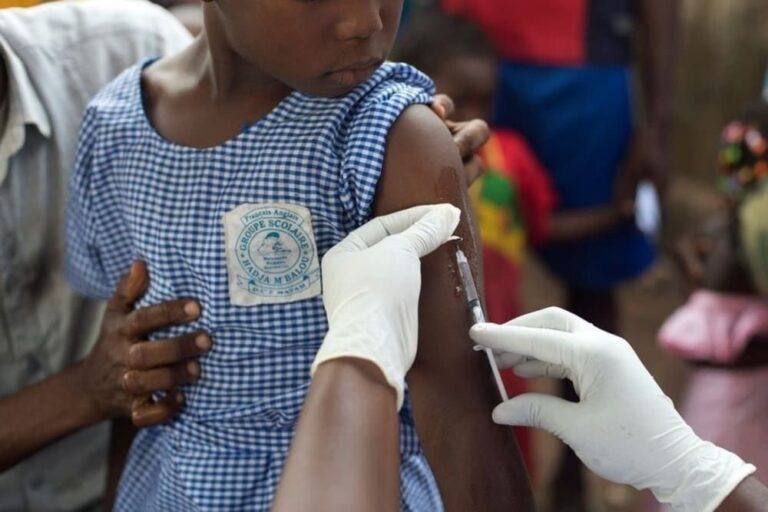
Health authorities in the Democratic Republic of Congo (DRC) have launched a large-scale measles vaccination campaign in Goma and surrounding areas of North Kivu, a province severely affected by a resurgence of this highly contagious disease.
A large-scale measles vaccination campaign in the DRC targets more than 260,000 children aged 6 to 59 months in the health zones of Goma, Karisimbi, and Nyiragongo. It is being conducted with the support of Doctors Without Borders (MSF) as part of efforts to curb an epidemic that continues to rage in several regions of the country.
Since the beginning of 2026, thousands of cases have been recorded, with a particularly serious impact on young children, who are most vulnerable to complications. Measles can lead to severe forms of the disease, including pneumonia, acute diarrhea, malnutrition, and eye disorders that can cause blindness.
Launched on March 17, the vaccination campaign is part of a broader national response, combining
mass vaccination campaigns, strengthened epidemiological surveillance, and community awareness efforts on the importance of vaccination.
However, these actions remain difficult to implement due to persistent insecurity in the east of the country. Armed conflict and population displacement complicate access to affected areas and disrupt health services, contributing to insufficient vaccination coverage in some localities.
Faced with these challenges, Congolese authorities and their humanitarian partners are calling for intensified efforts to expand vaccination and prevent new outbreaks.
Similar campaigns are also underway in other provinces, as part of a national program aimed at protecting millions of children against this preventable disease.
In 2025, nearly 82,869 suspected cases of measles were recorded in the DRC, with approximately 1,175 deaths. The disease has affected almost all provinces, illustrating its widespread transmission nationwide.
The health situation remains concerning: approximately 39% of health zones experienced an epidemic during the year.
Children are the primary victims, with a high mortality rate that is nonetheless preventable through vaccination and appropriate care.
Several factors explain this situation, including insufficient vaccination coverage, humanitarian crises and conflicts that limit access to healthcare, as well as the fragility of the health system.
In short, the DRC remains one of the countries most affected by measles in the world, with particularly intense circulation of the virus expected in 2025.
TE/Sf/fss/as/APA