





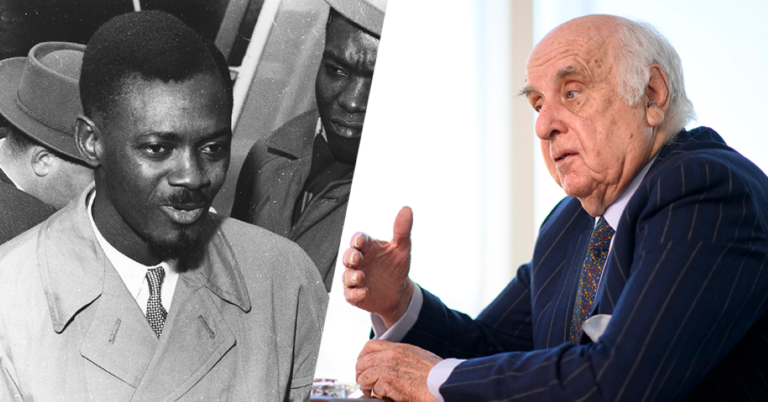
Patrice Lumumba’s family have vowed to fight on despite the death of the man ordered to stand trial over his 1961 assassination.
But under Belgian law the case may suffer a body blow following Étienne Davignon’s death earlier this week.
Davignon was the last surviving perceived assessory to the murder of Mr Lumumba and there are fears that his death may have sounded the death knell on the last remaining hope of imparting justice for one of Africa’s most regrettable political assassinations in living memory.
Lumumba’s family reacting to Davignon’s death, described it as a regrettable turn of event and vowed to press on with the broader search for the ultimate truth surrounding the circumstances which led to his execution and accountability by those responsible.
The Lumumba family have since announced that legal action in the civil courts would be pursued against the Belgian state with a view to shedding light on colonial-era crimes in the DR Congo.
Six decades have passed since his death, but Lumumba remains a revered historical figure of the latter half of the 20th century after leading DRC to independence in 1960 and assassinated months later when the country descended into conflict.
Throughout this period, local and international calls for justice over his murder have been gathering momentum, leading to former colonial power Belgian owning up to its ‘indirect role’ in Lumumba’s death.
In 2001, investigators concluded that Davignon bore some ”moral responsibility” for Lumumba’s death in the hands of his Congolese captors.
Davignon 93, was due to stand trial in a Belgian court over his alleged role in the death and recently filed an appeal against the decision but died while awaiting the outcome of his request.
Nine other alleged accomplices of Davignon had died, meaning that proceedings against them could no longer be pursued under Belgian law after the suspects’ deaths.
It is inconceivable how criminal proceedings can continue against Davignon after he passed away on May 18, 2026.
According to information declassified by the CIA, Davignon, then a junior diplomatic intern representing Belgium in the newly independent DR Congo, had played a key role in justifying the removal of Mr Lumumba as prime minister and his subsequent arrest and detention during which he was subjected to degrading treatment by his captors.
Prosecutors accused Davignon of personally facilitating Lumumba’s transfer together with two of his allies, Joseph Okito and Maurice Mpolo to the separatist region of Katanga, at the height of its secessionist conflict against the new government.
They said Davignon knew that the three men would be assassinated but showed blithe disregard for this by handing them over to their eventual executioners.
There are graphic details of how Lumumba’s body was submerged in acid shortly after the executions. Only his tooth was later recovered and kept by a Belgian officer as a trophy for decades before it was returned to DR Congo where it was a buried at a meusoleum in the capital Kinshasa in 2022.
WN/as/APA