



The African Union (AU) has secured $910 million in funding pledges to bolster the response to the Ebola Bundibugyo outbreak currently affecting the Democratic Republic of Congo (DRC) and Uganda.
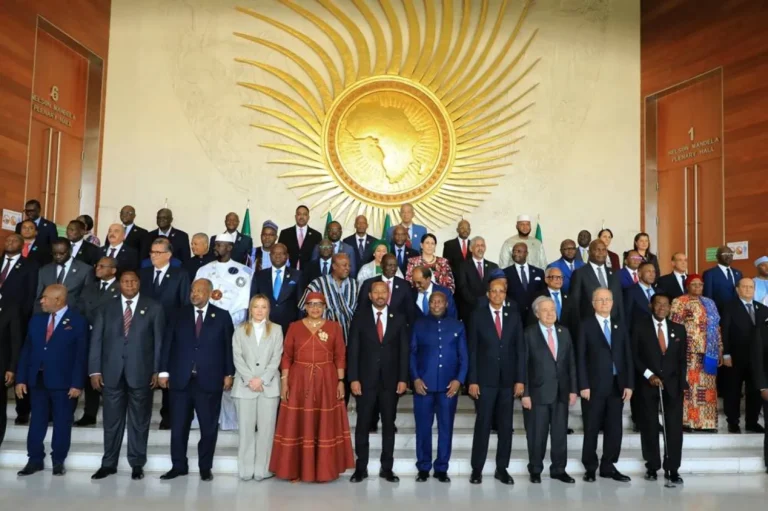
The breakthrough follows a high-level emergency meeting convened on Wednesday by Burundian President Évariste Ndayishimiye, the bloc’s rotating chairperson.
Out of the $910 million pledged against the Ebola outbreak, $80 million has been committed directly by African member states.
African leaders called for a swift disbursement of the funds to cover the immediate requirements of the Joint Continental Preparedness and Response Plan, which are estimated at $518 million for the next four weeks.
“Our populations will not judge us by our declarations, but by our ability to interrupt transmission and protect healthcare workers,” said Évariste Ndayishimiye.
Dr. Jean Kaseya, Director-General of the Africa Centres for Disease Control and Prevention (Africa CDC), welcomed the move as a powerful demonstration of African solidarity, while underscoring the urgency of translating financial commitments into concrete action on the ground.
“Every pledge must be converted into actual funding, supplies, human resources and tangible support for the communities and frontline responders,” Kaseya insisted.
The World Health Organization (WHO) reaffirmed its support for the affected nations, particularly in epidemiological surveillance, contact tracing, laboratory capacity and case management.
The summit participants identified contact tracing as a critical priority to contain the virus’s spread, setting a target tracking rate of 90% to 95% throughout the 21-day incubation period.
Africa CDC warned that if transmission is not rapidly brought under control, financial requirements could surge from $518 million to $1.5 billion. The public health agency will now conduct weekly monitoring of financial pledges, disbursements and field operations to accelerate the health response.
The meeting concluded with a collective call to governments, international partners, financial institutions and private sector actors to transition swiftly from pledges to actual deliveries to support affected communities in both the DRC and Uganda.
TE/Sf/lb/gik/APA