





In a major re-engineering of its national grid architecture, the Egyptian government has dramatically accelerated its green transition by revising its clean energy timeline.
President Abdel Fattah Al-Sisi formalized a revised target aiming to raise the share of renewable energy to 45% of the national electricity mix by 2028, pulling the country’s clean energy ambitions forward from its previous goal of 42% by 2030.
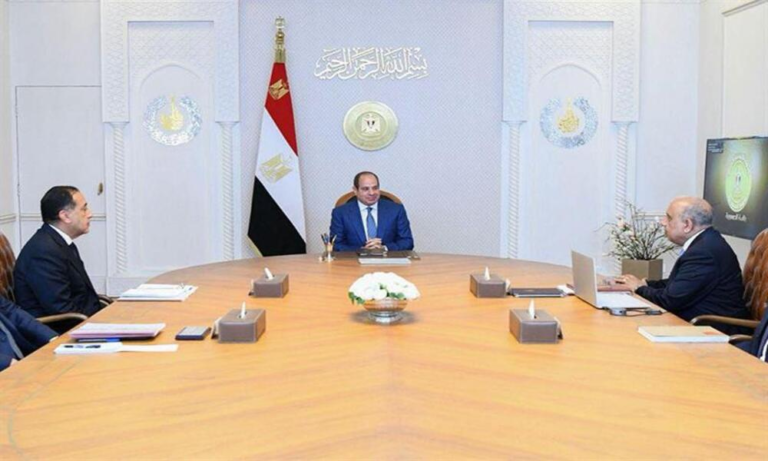
The strategy was consolidated during an executive briefing where Minister of Electricity and Renewable Energy Mahmoud Esmat presented the operational status of several multi-gigawatt solar, wind, and battery utility projects. Facing a baseline where fossil fuels still generate more than 80% of national power, Cairo treats this transition as a national security priority designed to blunt the country’s exposure to international fuel price volatility and insulate domestic grids from regional gas supply shocks.
Central to this generation push is the immediate expansion of Egypt’s solar footprint. The government is executing the second 500-megawatt phase of the landmark “Obelisk” solar-and-storage project in Nag Hammadi, positioned in Upper Egypt, which is scheduled for direct national grid integration. This is running alongside the parallel development of an expansive 1,700-megawatt utility-scale solar complex situated within the Minya governorate.
Recognizing that the core challenge of large-scale solar and wind deployment lies in resource intermittency rather than generation volume, the Ministry of Electricity is simultaneously constructing massive energy storage networks to stabilize grid transmission. Standalone and grid-tied battery stations representing a combined capacity of 4,000 megawatts are being systematically deployed across the governorates of Minya, Alexandria, and Qena to absorb midday generation surges and guarantee a steady baseline supply during peak evening demand.
Complementing the solar infrastructure, coastal engineering teams are advancing the construction of the 900-megawatt Ras Shoukeir wind farm along the Red Sea, targeting full commercial commissioning. Egyptian authorities directly frame this capital intensive infrastructure overhaul as an economic shield against escalating regional geopolitical friction, explicitly aiming to secure long-term industrial output while establishing the Arab Republic as a definitive green energy hub for the Mediterranean and broader North African corridor.
MK/ak/Sf/lb/abj/APA