



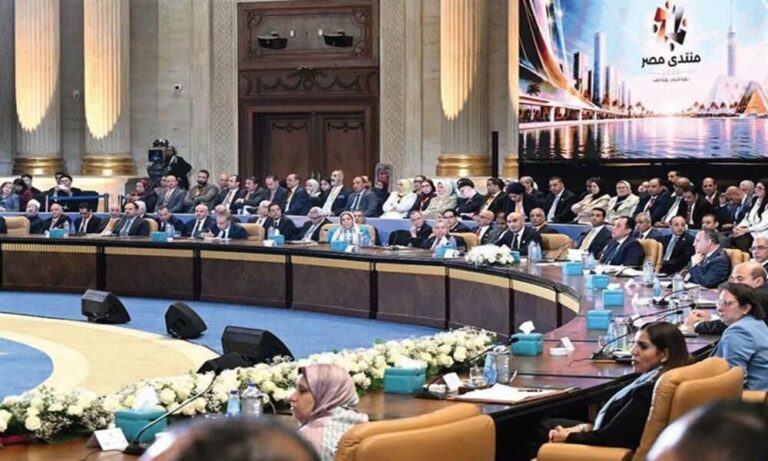
The first two days of the Egypt 2026 Forum were dedicated to education reform, economic development, youth, and the improvement of living conditions.
Deliberations at the forum, which opened on October 19, examined key national development priorities – ranging from education and the economy to culture, sports, and public services.
The discourses focused, in particular, on aligning public policy with the needs of citizens and the labour market.
In the education sector, the Minister of Education and Technical Education, Mohamed Abdellatif, presented measures aimed at improving the quality of instruction and strengthening national identity.
Arabic, national history, and religious education will become mandatory in all schools – including international ones – with a four-year implementation period.
The ministry also plans to eliminate double-shift schooling in primary schools by September 2027, with the goal of phasing it out across all other educational levels by 2029.
Higher education is set to prioritise scientific and practical fields, digital transformation, and stronger ties between research and industry.
Minister Abdel-Aziz Konsowa noted that Egypt currently has 131 universities. The objective is to increase the proportion of students enrolled in scientific and practical disciplines to 60%, while fostering innovation and technology transfer.
Youth and sports were also on the agenda. Minister Gohar Nabil presented the results of the “Olympic and Paralympic Champion” program, which has been rolled out across all 27 governorates.
According to the data provided, 577 athletes trained through this initiative have joined national teams and won approximately 5,670 medals.
A new mechanism is intended to facilitate access for pupils and students to the country’s 4,600 youth centres.
Economic discussions focused on protecting purchasing power, regulating markets, and boosting investment.
The government intends to support production and the private sector across five priority areas:
industry, agriculture and the agri-food sector, tourism, telecommunications, and energy. It aims for the private sector to account for 59% of national investment by 2026-2027.
The second day was dedicated to territorial development and quality of life. The interactive sessions covered housing, infrastructure, the rehabilitation of informal settlements, the development of new cities, and the “Hayah Karima” (Decent Life) initiative, which aims to improve living conditions in rural villages.
The digitalisation of public services and the rollout of universal health insurance were also examined. Finally, specialized workshops addressed the issue of debt, as well as the risks associated with an energy crisis triggered by potential disruptions in the Strait of Hormuz.
MK/AK/Sf/fss/as/APA