



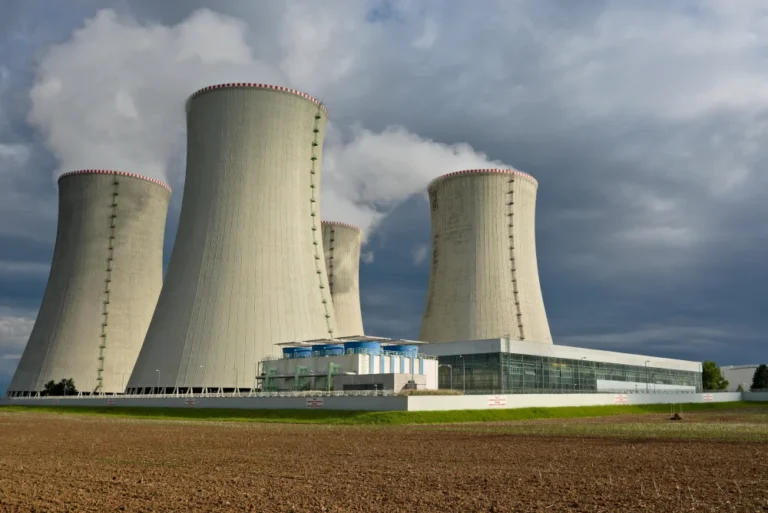
Egypt’s Prime Minister Mostafa Madbouly confirmed that the first unit of the Al-Dabaa nuclear power plant will be operational in three years, staffed exclusively by Egyptians.
This represents a strategic step in the quest for energy independence.
Egypt confirmed this week that the first unit of the Al-Dabaa nuclear power plant, located on the northwest coast, will be commissioned in 2028, according to the schedule agreed with the Russian company Rosatom, the project’s main partner.
At a technical meeting in Cairo chaired by Prime Minister Madbouly, in the presence of Electricity Minister Mohamed Shaker and a Rosatom delegation, the authorities reaffirmed their commitment to making nuclear energy a pillar of national energy security.
The Al-Dabaa site will eventually house four VVER-1200 reactors, with a total capacity of 4,800 megawatts. The goal is to produce nearly 10% of the country’s electricity consumption by 2035, while reducing dependence on imported natural gas and hydrocarbons.
Notably, the government announced that the first unit will be operated 100% by Egyptian engineers and technicians, currently undergoing advanced training in Russia and at local nuclear training centers.
This strategy aims to ensure long-term technological sovereignty and limit dependence on foreign expertise.
The Al-Dabaa project, estimated to cost $25 billion, is largely financed by a concessional loan granted by Moscow and is the subject of a turnkey contract that includes construction, maintenance, and training.
This technological breakthrough is part of a national strategy to diversify the energy mix in a country facing rapid growth in demand, tensions over gas supplies, and the partial obsolescence of its electricity fleet.
Egypt also intends to use this infrastructure as a lever for energy diplomacy, positioning itself as a model for other
African countries interested in civilian nuclear power.
Delegations from Sudan, Ghana, and Kenya have already conducted technical visits to Al-Dabaa.
While the project has garnered broad national consensus, some environmental NGOs are calling for greater transparency regarding safety measures, radioactive waste management, and the participation of local communities in the decision-making process.
MK/ac/Sf/fss/as/APA