





The African Union (AU) Commission warned that Africa could experience the worst extreme weather anomalies to be triggered by El Niño event as of November this year.
Speaking at the extraordinary session of a specialized technical committee regarding the weather pattern AU Commissioner for Agriculture, Rural Development, Blue Economy and Sustainable Environment (ARBE) Moses Vilakati said on Thursday that scientific projections indicate a 90 percent probability of a Super El Niño event developing later this year, with peak intensity expected between November 2026 and February 2027.
“The 2026/2027 El Niño event is projected to be the strongest since 1950. This is not a distant possibility. It is an imminent risk that demands immediate preparation at national, regional and continental levels,” Vilakati told the ministerial session,
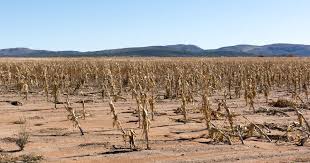
He said with these projections, many regions of the continent are likely to experience severe droughts, devastating floods, prolonged heat-waves, and disruptions to food production, water shortages, disease outbreaks and increased humanitarian needs.
“The question before us is no longer whether another El Niño will occur. The scientific evidence suggests that it will. Africa needs to be sufficiently prepared to anticipate, mitigate and respond effectively to its impacts,” said Vilakati, noting that Africa is increasingly exposed to climate variability and extreme weather driven by global El Niño events.
He said experience has consistently shown that El Niño affects every region of Africa differently with some regions facing severe droughts and prolonged dry spells, others experiencing devastating floods, landslides and outbreaks of climate-sensitive diseases.
In a statement issued recently, the African Development Bank (AfDB) warned that the anticipated “super” El Niño could inflict a combined 10 to 20 billion U.S. dollars economic hit on African countries, with adaptation finance requiring nearly 100 billion U.S. dollars.
MG/as/APA