





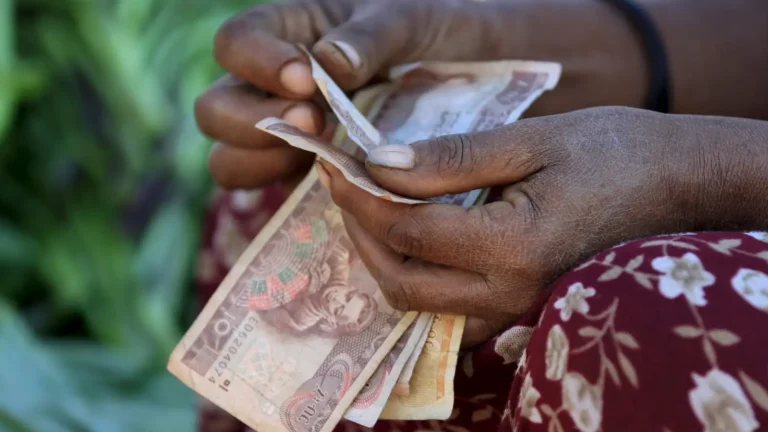
The World Bank’s Africa Economic Update over the weekend revealed that the Ethiopian birr was the weakest currency in sub-Saharan Africa in 2025 despite the East African nation being one of the region’s largest economies.
The report has identified Ethiopia’s currency as the worst performer in the region over the year, alongside South Sudan, as several economies grappled with external financing constraints and domestic macroeconomic strains.
According to the report, the birr lost about 18 percent of its value year on year by the end of December 2025. South Sudan’s pound also weakened sharply over the same period, reflecting parallel but structurally different pressures within the two economies.
Oil has been the central fault line in South Sudan’s currency weakness, with repeated disruptions along the pipeline route through Sudan sharply curbing foreign exchange inflows. As hard currency dried up, import financing tightened and price pressures intensified, keeping inflation in triple digits from mid-2024 into mid-2025.
Ethiopia’s currency weakness, by contrast, reflects a more gradual strain within ongoing foreign exchange market reforms. The report notes that liberalization efforts have come under pressure, with the gap between official and parallel market rates widening into the high teens since end-December 2025, signaling continued imbalance in foreign currency allocation.
The report noted that the National Bank of Ethiopia has kept refining its foreign exchange measures, including raising limits on selected current account transactions, in an effort to narrow market distortions and improve liquidity conditions, even as gaps between official and parallel market rates remain elevated.
The broader regional picture is uneven. While several resource-dependent economies benefited from stronger commodity prices and policy support, Ethiopia remained under persistent currency pressure despite pockets of resilience in its domestic economy.
Even so, the report pointed to easing inflation in Ethiopia as a potential opening for gradual monetary policy adjustment. Export performance has also remained relatively steady in East Africa, with Ethiopia grouped alongside Kenya and Uganda among economies still recording growth in external sales.
Looking ahead, Ethiopia’s growth outlook is expected to be anchored by agriculture and expanding electricity generation capacity. But the report cautioned that renewed geopolitical tensions in the Middle East could quickly feed into global energy prices, potentially reversing recent disinflation gains and complicating the country’s monetary adjustment path.
MG/abj/APA