





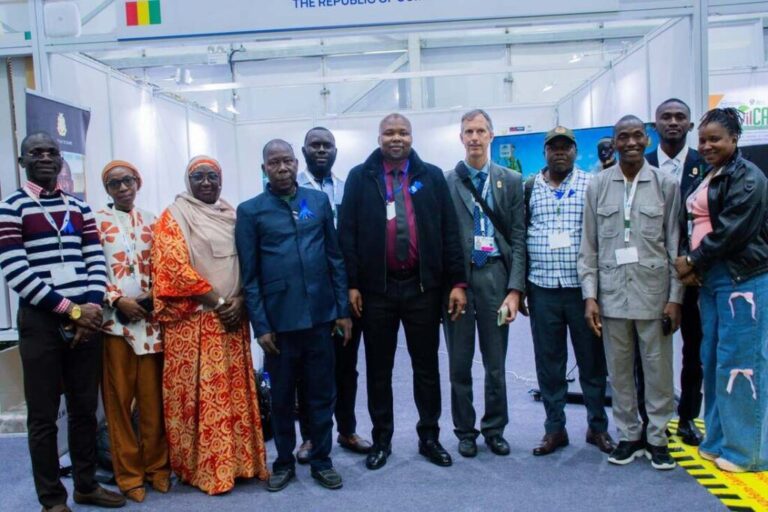
Guinea has called for strengthened protection of land and water resources, arguing that ecosystem degradation directly threatens water security in West Africa.
Speaking at the ministerial segment of the 17th Conference of the Parties to the United Nations Convention to Combat Desertification (COP17), held from August 17 to 28, 2026, in Ulaanbaatar, Mongolia, on the occasion of World Water Day, the Guinean delegation emphasised the close link between soil restoration and the preservation of water resources.
Nicknamed “West Africa’s Water Tower,” Guinea is home to the Fouta Djallon highlands, a major source of several rivers that feed large watersheds in the sub-region and upon which millions of
people depend.
However, land degradation in upstream areas promotes erosion, siltation of waterways, and disruption of hydrological regimes. The situation in the Bafing River basin illustrates, according to Conakry, the growing risks associated with the weakening of ecosystems.
Faced with worsening droughts, Guinea is calling for a focus on anticipation rather than managing crises after they have occurred.
Four priorities
Conakry presented a strategy based on four pillars. The first aims to restore 375,000 hectares of land by 2030, particularly through nature-based solutions and assisted natural regeneration.
The second pillar focuses on strengthening early warning systems through improved use of data on rainfall, soil moisture, and water resources, to enable rapid intervention in the event of a risk.
The third priority aims for better coordination of agricultural, forestry, water, and mining policies, with a particular focus on sustainable watershed management, efficient irrigation, and riverbank
protection.
Finally, Guinea seeks to strengthen regional cooperation, notably through the sharing of hydrological data and the harmonisation of early warning systems among states sharing the same water resources.
The Guinean delegation also called on technical and financial partners to review their approach to financing climate resilience. It advocates for greater, more predictable, and accessible resources to finance water infrastructure, land restoration, and more sustainable agriculture.
Conakry believes that farmers, livestock breeders, women, and youth must be fully involved in decisions and actions related to ecosystem restoration.
Through its advocacy in Ulaanbaatar, Guinea intends to make prevention, regional cooperation, and integrated land and water management essential levers in the fight against desertification and
the effects of climate change in West Africa.
TE/fss/as/APA