





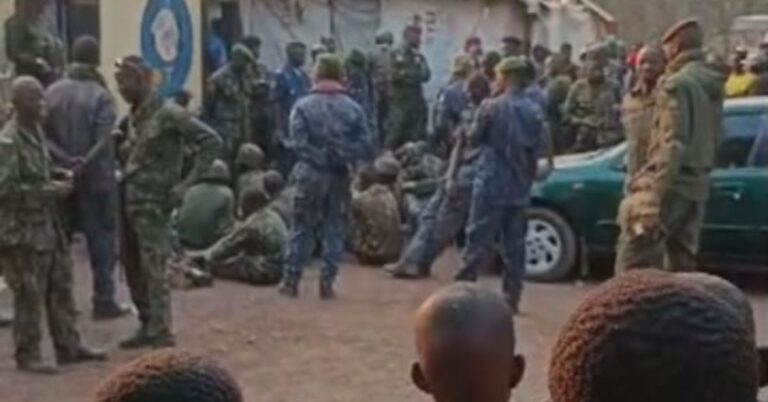
The escalating tension between Sierra Leone and Guinea is no longer just a footnote in the long-standing history of border arguments.
The reported arrest and detention of Sierra Leonean security personnel in the Falaba District has evolved into a serious diplomatic crisis that demands sober, urgent attention beyond the usual nationalistic posturing and cross-border “shakara.”
At the heart of the dispute is a fundamental disagreement over geography and sovereignty. According to the Ministry of National Defense in Conakry, Sierra Leonean soldiers crossed 1.4 kilometers into the Koudaya district of the Faranah region. Guinean authorities allege that the personnel set up a tent and hoisted the Sierra Leonean national flag on Guinean soil, prompting their forces to seize military equipment and take the personnel into custody.
However, authorities in Freetown present a starkly different account of the incident. They maintain that a joint security team—comprising military officers and members of the police Operational Support Division (OSD)—was operating strictly within sovereign territory in Kalieyereh, Falaba District. Freetown asserts the team was engaged in the legitimate construction of a border post and accommodation facility when they were apprehended by Guinean forces who crossed the frontier.
While official confirmation remains tightly controlled, reports indicate that between 13 and 16 Sierra Leonean personnel are currently being held. Disturbingly, accounts from the border suggest that the confrontation was not bloodless, with claims of injuries sustained by the detained officers during the struggle. Following their arrest, the personnel were reportedly transported to Conakry, a move that further complicates consular access and diplomatic resolution.
This incident is far more than a simple misunderstanding; it exposes critical failures in border coordination and precision. Several uncomfortable questions must now be addressed by both administrations regarding whether the boundary was clearly marked on the ground or if both sides were operating in a “gray zone.” There is also a pressing need to determine if GPS coordinates were verified by a joint technical committee before construction began and whether local commanders had an established communication hotline to prevent such an escalation.
The Kalieyereh incident highlights a persistent weakness in regional border preparedness. If the Sierra Leonean personnel were indeed within their own territory, the state is obligated to defend that position with documented evidence and firm diplomatic engagement. Conversely, if there is genuine ambiguity in the boundary line, it underscores an urgent need for physical demarcation through international mediation or technical cooperation.
More broadly, the seizure of sovereign equipment and the injury of officers should serve as a wake-up call for the region. A sovereign state’s security depends on modern infrastructure rather than just manpower. Investing in advanced mapping systems, surveillance technology, and secure communication tools is no longer a luxury; it is a prerequisite for preventing posturing from turning into a violent skirmish. As the two governments navigate these clashing narratives, the focus must shift from military pride to technical accuracy to ensure the peace of the Mano River Union remains intact.
ABJ/APA