





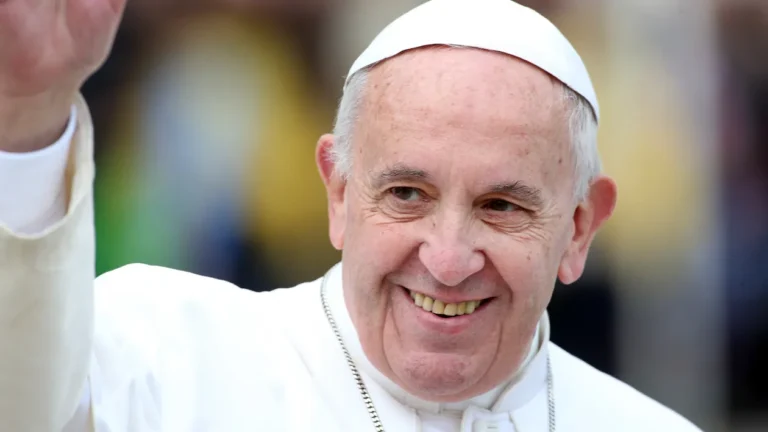
As the Catholic world mourns the death of Pope Francis who passed away on Easter Monday at the age of 88, attention now turns to a monumental question: who will lead the Church next? And more pointedly – could it finally be Africa’s turn?
Pope Francis, the first Latin American pontiff, leaves behind a Church transformed by his 12-year tenure.
His focus on inclusivity, outreach to the marginalised and decentralisation of traditional power structures expanded the Church’s reach, particularly across the Global South.
His funeral, attended by hundreds of thousands at St. Peter’s Square on April 26, reflected this and marked the end of an era – and the beginning of a critical new chapter, which begins with elections for the 267th Pope.
If demographics alone dictated the next pontiff, Africa would be the clear frontrunner.
The continent’s Catholic population has boomed, adding over half of the global increase in recent years.
As of 2023, Africa was home to 281 million Catholics, representing 20 percent of the worldwide congregation.
Despite this growth, no African has ascended to the papacy since Pope Gelasius I who died more than 1,500 years ago. Gelasius I, who was Pope from March 492 to November 496, was believed to have been born in the Roman province of Africa (modern Tunisia and northern Libya).
Religious experts believe the Church’s leadership should reflect its increasingly diverse membership.
Yet they also acknowledge a significant barrier: few African clergy currently hold senior positions at the Vatican, which could hinder their prospects.
Figures like Cardinal Robert Sarah of Guinea and Cardinal Fridolin Ambongo Besungu of the Democratic Republic of Congo have emerged as influential voices within global Catholicism.
Ghanaian Cardinal Peter Turkson, who has previously held key roles in the Vatican, is also seen as a strong contender.
The next leader of the 1.4 billion-strong Catholic Church will be elected during a conclave – a centuries-old, secretive ritual held in the Sistine Chapel in the Vatican City.
Only cardinals under the age of 80 are eligible to vote; currently, 135 meet this criterion.
The cardinal-electors are a diverse group: Europe holds the most with 53, followed by Asia (23), Africa (18), South America (17), North America (16) and Oceania and Central America (four each).
Among the African electors are other notable figures like Cardinal Stephen Brislin of South Africa, Cardinal Antoine Kambanda of Rwanda and Cardinal Peter Okpaleke of Nigeria.
Conclaves are steeped in tradition.
Cardinals are locked away – cum clave, meaning “with a key” – to deliberate and vote until a new pope is chosen.
Once a candidate receives a two-thirds majority, white smoke will rise above the Sistine Chapel, signalling the election to the world.
Pope Francis’ legacy complicates speculation about his successor.
By appointing cardinals from previously underrepresented nations, he broke traditional voting blocs, making this conclave one of the most unpredictable in modern history.
The next conclave will not only decide who leads the Catholic Church but also determine its future direction.
At stake is more than just a name or a nationality. It’s about the heart and soul of a global Church facing unprecedented challenges and opportunities.
JN/APA