





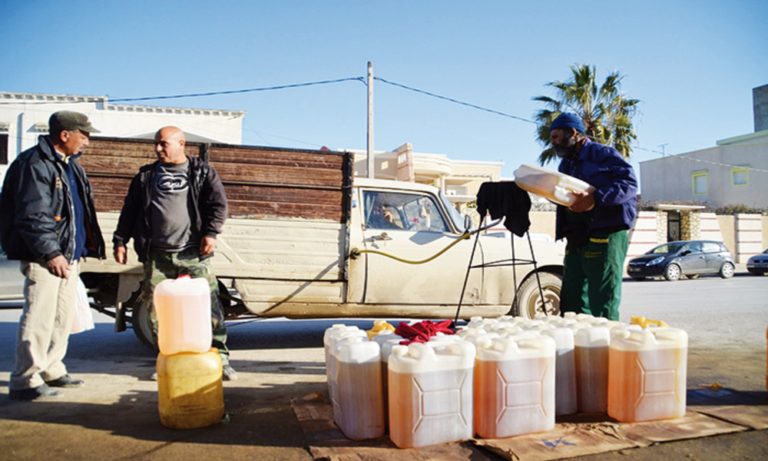
The Libyan Audit Bureau has issued a sharp warning to the Government of National Unity, cautioning that continuing fuel imports through opaque barter mechanisms poses a severe threat to the nation’s public finances.
In an official letter addressed to Prime Minister Abdul Hamid Dbeibah, the oversight body insisted that strict adherence to public tendering is the only legal framework capable of guaranteeing transparency and safeguarding state funds. The Bureau explicitly clarified that any government request to maintain the previous import volumes from late 2025 does not carry its endorsement, framing the suspension of formal tenders as an unauthorized departure from fiscal responsibility.
Investigations conducted by the Audit Bureau have highlighted significant shortcomings and systemic weaknesses in the management of current supply contracts. These irregularities have resulted in unjustified financial burdens on the state budget, which the oversight body characterizes as a blatant waste of public resources. By bypassing competitive bidding, the government has moved away from established protocols intended to attract qualified international companies and ensure that Libya receives fuel at optimal prices and quality standards.
The push for reform follows a series of high-level coordination meetings involving the Attorney General, the Central Bank of Libya, and the National Oil Corporation (NOC). These stakeholders previously reached a consensus on the urgent need to modernize supply mechanisms to prevent corruption and mitigate the operational risks inherent in the fuel trade. The Audit Bureau views the potential return to alternative, non-tendered arrangements as a major step backward from the country’s commitments to institutional reform and the protection of its national wealth.
MK/AK/Sf/fss/abj/APA