





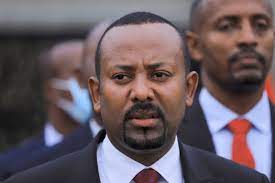
Abiy Ahmed has been appointed as Prime Minister of Ethiopia for a second five-year term during the seventh regular session of the national parliament held on Monday.
The reappointment comes after the ruling Prosperity Party (PP) won the general election in June, securing 438 of the 486 contested seats in the parliament.
In his speech following the appointment, Abiy presented key social, economic, and political directions and plans his government will pursue over the coming five years.
He highlighted ensuring national security and stability, sustaining the country’s socioeconomic development, and further strengthening the ongoing, wide-ranging national reform initiatives as his government’s major targets.
Ethiopia’s constitution places the national parliament at the center of federal legislative authority. It stipulates that the political party or coalition holding a majority of seats in the HoPR forms and leads the federal executive, with election results establishing the parliamentary basis for the formation of a new government.
The federal government’s post-election transition follows regional council formations across the East African country, as regional states recently constituted their respective governments and elected their chief administrators.
The reappointment comes as federal forces and their allies consolidate control of Mekelle, the Tigray regional capital, after the Tigray People’s Liberation Front (TPLF) withdrew from the city.
The TPLF said it had temporarily withdrawn to reduce risks to civilians, but fighting has continued elsewhere in Tigray, with airstrikes and artillery reported on Monday and humanitarian sources reporting at least seventeen deaths in attacks near Mekelle.
The renewed conflict began on September 23 and has raised fears of a return to the devastating 2020–2022 Tigray war, which ended with the Pretoria peace agreement.
MG/as/APA