





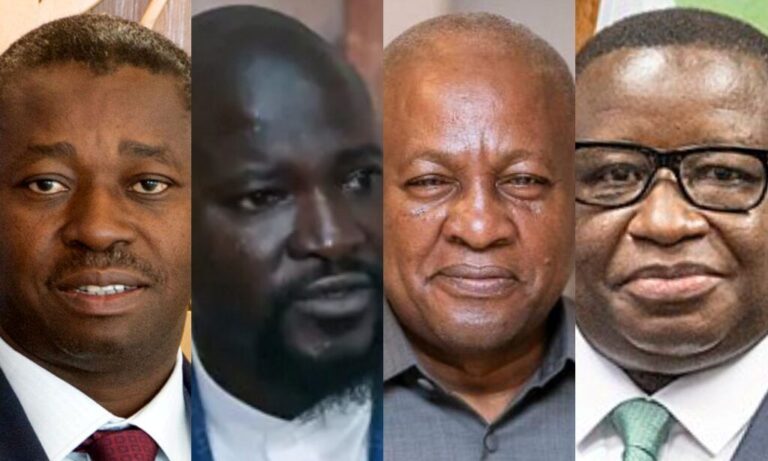
Ecowas fragility hangs in the balance amid two separate territorial disputes between its members.
As the West African regional bloc navigates a turbulent period following the departure of Sahelian Alliance countries and several unconstitutional changes, a maritime dispute between Ghana and Togo on the one hand, and a border incident between Guinea and Sierra Leone on the other, are testing its mediation capacity and the strength of its institutions.
These disputes involving four of its member states come in the aftermath of the withdrawal from the bloc of Mali, Burkina Faso, and Niger, now grouped within the Alliance of Sahel States (AES).
The trio’s departure had increased the pressure on the organisation, which must maintain its cohesion and credibility with its remaining members.
The first dispute pits Ghana and Togo against each other over the delimitation of their maritime border. Accra notified Lomé on February 20 of the initiation of international arbitration proceedings based on the United Nations Convention on the Law of the Sea. Lomé while taking note of this “took initiative, reaffirmed its commitment to a peaceful and equitable settlement, following the
failure of bilateral talks initiated in 2018.
The situation is all the more delicate given Togo’s position with Ecowas’s recalcitrant former members as Lome previously refused to comply with the economic sanctions imposed by the bloc on the political transitions in those countries. Togo was appointed mediator, along with Senegal, to negotiate the possible return of these countries to the organisation—a mediation that ultimately failed.
The second case concerns an incident on the border between Guinea and Sierra Leone. Conakry claims to have apprehended 16 Sierra Leonean soldiers accused of entering its territory without prior authorisation. Freetown maintains that the soldiers in question were in an area under its jurisdiction and denounces what calls a violation of its territorial sovereignty.
Their disagreements is over the exact location and responsibility for the incident.
This dispute takes on a particular dimension since Sierra Leonean President Julius Maada Bio currently holds the rotating chairmanship of Ecowas, obligating the institution to guarantee the impartiality of its mediation mechanisms.
The situation in Guinea also complicates matters. Suspended after the September 2021 coup against former President Alpha Condé, Conakry was engaged in a normalisation process with Ecowas, facilitated by the presidential election that brought coup leader and transition head General Mamadi Doumbouya, to power.
This gradual return to the Ecowas fold makes managing the border incident particularly sensitive.
These tensions arise at a time when the Ecowas Commission, the organisation’s executive arm and operational engine, is preparing to be led by Senegal for the 2026-2030 term.
The appointment was formalised at the 68th Ordinary Session of the Conference of Heads of
State and Government in Abuja.
Dakar inherits a weighty responsibility: to lead West African integration and coordinate crisis prevention in a particularly precarious environment. The Commission, as an operational body, has at its disposal instruments such as good offices, assessment missions, and political facilitation, which will be essential for simultaneously managing disputes between member states and preserving regional stability.
Ecowas’s capacity to address these issues impartially and effectively, while strengthening its community institutions, will be a key indicator of its credibility and relevance in a rapidly changing geopolitical reality in West Africa.
AC/fss/s/APA