





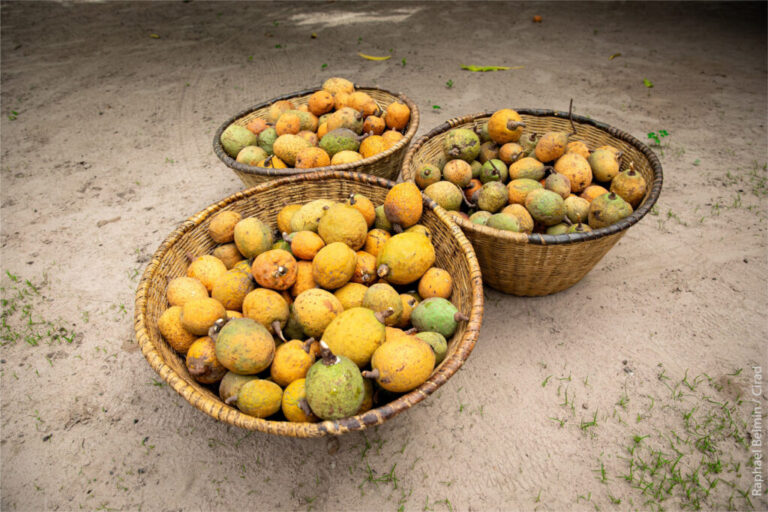
The madd de Casamance, a traditional wild fruit from southern Senegal, was on June 25, 2024 given official designation by the African Intellectual Property Organization, according to an article by the UN Food and Agriculture Organization (FAO) seen by APA.
This designation safeguards the name “madd de Casamance” and ensures that only fruit harvested in the specified region and processed in accordance with strict production standards may bear the label.
The legal protection is the result of an eight-year process coordinated by the FAO, in partnership with the French Agricultural Research Centre for International Development (CIRAD) and the World Intellectual Property Organization (WIPO).
The project was implemented by Économie Territoire et Développement Services (ETDS), a local non-profit organisation, in collaboration with the Association for the Protection and Promotion of the Geographical Indication Madd de Casamance (APPIGMAC), which brings together local producers.
A fruit with multiple benefits
The madd, an orange fruit that can measure up to 10 centimeters, grows on vines that wind around forest trees reaching over 40 meters high. Rich in vitamins A and C and antioxidants, it plays a central role in the culture of Lower Casamance, flourishing in “sacred forests,” which are traditional sites of worship.
Currently, only 2 percent of the harvest is processed into juice and preserves, with the rest consumed fresh by local communities, according to the FAO.
“With the registration of the geographical indication, public authorities now recognise the importance of this wild fruit and its value chain as a driver of sustainable local growth,” said Pape Tahirou Kanouté, Executive Director of ETDS, quoted by the FAO.
Producers now benefit from better market positioning, with prices rising by nearly 20 percent on some markets. Mamadou Baldé, an official harvester since 2020, reported an expansion of his professional network and higher sales volumes.
The product specifications include strict environmental safeguards: a ban on cutting climbing plants, harvesting fruit before maturity, or using artificial ripening methods. Processing must take place within 200 kilometers of the harvesting area.
The Senegalese Forestry Department works with local village committees to ensure sustainable resource management, including mapping production zones, managing forest fires, and undertaking reforestation initiatives.
This development is part of Africa’s growing geographical indication movement, which now includes more than 200 registered products across the continent, such as “Penja pepper” from Cameroon and “Lagoon attiéké” from Côte d’Ivoire.
ARD/ac/lb/as/APA