





Faced with the repercussions of tensions in the Strait of Hormuz and internal security challenges affecting fuel convoys, the Malian government is relying on a monitoring system and structural measures to safeguard its strategic sectors, amid heavy dependence on regional trade.
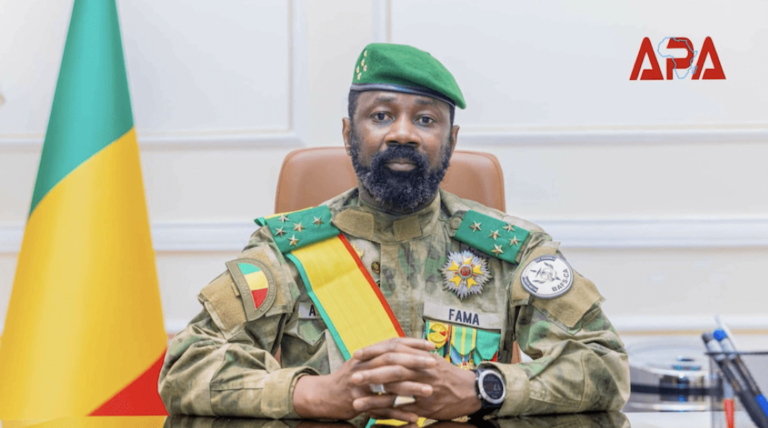
The Malian government expressed its concerns about the impact of geopolitical tensions in the Middle East on the national economy during the Council of Ministers meeting held on Thursday, March 26, at the Koulouba Palace, under the chairmanship of head of state General Assimi Goita.
The regional crisis is unfolding against a backdrop of persistent instability in the Gulf, with disruptions to maritime traffic in the Strait of Hormuz, a strategic waterway through which a significant portion of global oil trade passes, posing risks to the energy supplies of importing countries like Mali.
According to the Minister of Industry and Trade, this situation could affect supply chains linking Asia, Europe, and Africa, impacting access to petroleum products and essential goods.
This vulnerability is exacerbated by Mali’s heavy reliance on regional trade corridors, particularly with Senegal. According to the Monthly Bulletin of Foreign Trade Statistics published by the National Agency for Statistics and Demography (ANSD), Mali was Senegal’s largest trading partner in January 2026, absorbing 17.5% of Senegalese exports, out of a total export volume estimated at 412.6 billion CFA francs.
This central position illustrates the strategic importance of trade flows between the two countries, especially for energy, food, and manufactured goods.
To anticipate the combined effects of these dependencies and international tensions, a response plan structured around ten key areas has been developed in collaboration with the Ministry of Economy and Finance. It includes a monitoring system based on indicators with alert thresholds, allowing the government to adjust its measures according to the evolving situation.
This vigilance comes in a national context already marked by tensions in fuel supply chains, linked to attacks targeting logistics convoys.
In recent months, however, a relative improvement in the situation has been observed on certain routes.
According to unconfirmed reports, this lull is linked to negotiations between Malian authorities and jihadist groups, which reportedly led to the release of around one hundred fighters.
The transitional authorities have not yet confirmed these details.
In this dual context of external and internal pressures, the government intends to strengthen the resilience of the national economy and secure strategic supply chains.
MD/ac/Sf/fss/as/APA