





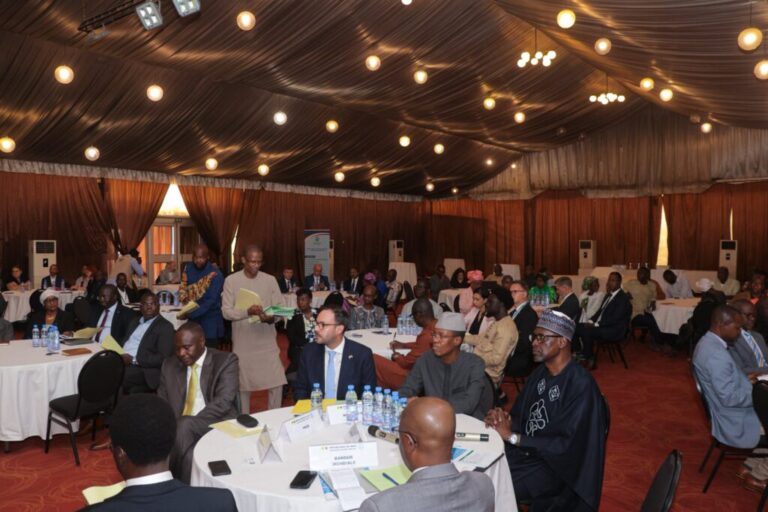
The Malian government has unveiled its long-term strategy, “Vision Mali 2063,” to its technical and financial partners.
The plan, which aims to transform the country’s economy and society, is supported by a 10-year operational phase, the National Strategy for Emergence and Sustainable Development (SNEDD 2024-2033).
The new vision is built on 11 key projects focusing on infrastructure, energy, and agriculture. The SNEDD’s total cost is estimated at 61,232.1 billion CFA francs, with an additional financing need of 1,139 billion CFA francs. Its primary goals are to reduce poverty and improve access to basic services like education, health, and clean water. The plan also seeks to diversify the economy beyond mining by promoting agriculture, renewable energy, and local industrialization.
The International Monetary Fund (IMF) projects Mali’s real growth will reach 5% in 2025 and 5.4% in 2026 if major mining operations resume. The budget deficit is expected to increase to 3.4% of GDP in 2025 due to new government spending.
Two major projects are already underway as part of this plan: The construction of a 140-kilometer road from Diéma to Sandaré in the Kayes region, where almost half the population lives below the poverty line. The road is expected to improve access to healthcare, markets, and social services. The Sanankoroba solar power plant, with a capacity of 200 megawatts, is under construction. Once completed, it is expected to provide 10% of the country’s electricity, reducing its reliance on imported fossil fuels.
During the September 9 presentation, technical and financial partners praised the initiative but called for rigorous monitoring, transparent management, and a focus on mobilizing internal resources. The Malian government stated that Vision 2063 is its national path toward a “sovereign and emerging Mali” by 2063.
MD/ac/Sf/fss/abj/APA