





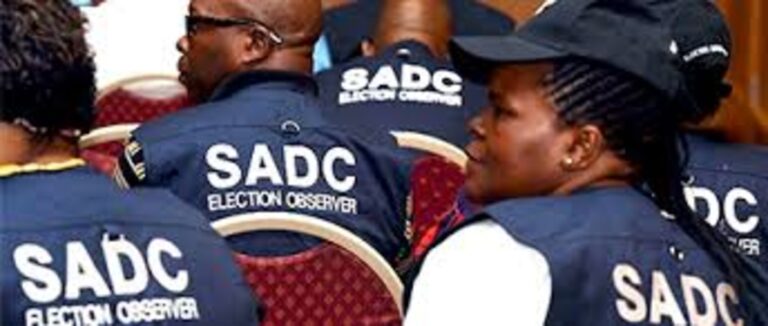
Regional and continental election observer missions have called for far-reaching reforms to Malawi’s electoral laws and systems even as they commended the peaceful and orderly conduct of the country’s 2025 general elections held on 16 September.
In separate statements issued on Thursday, the Southern African Development Community (SADC) Electoral Observation Mission (SEOM) and the joint African Union-Common Market for Eastern and Southern Africa (COMESA) mission praised Malawians for their calm and civic engagement during the polls but warned that systemic gaps could undermine future electoral credibility if left unaddressed.
SEOM, led by former Eswatini Deputy Prime Minister Themba Masuku, urged the government of Malawi to prioritise legal amendments that would establish a continuous voter registration system and a permanent electoral roll.
“The mission also urges the government, with the facilitation of the MEC [Malawi Electoral Commission], to lead stakeholder consultations on reviewing the participation of citizens in the diaspora with a view to considering the possibility of extending voter registration and voting rights to citizens in the diaspora,” Masuku said in a statement.
The mission also recommended that the government clarifies the legal framework for the use of electronic systems in result transmission.
While acknowledging improvements since the 2019 elections – including enhanced logistical readiness and inclusivity measures by the MEC – SEOM stressed the need for law enforcement agencies to address reported electoral-related criminal acts and ensure a secure political environment.
The AU-COMESA mission, headed by former Ethiopian Prime Minister Hailemariam Dessalegn Boshe, echoed similar concerns and issued a broader set of recommendations targeting government, political parties, civil society, media and the MEC.
Among its key proposals were legislated gender quotas to boost representation of women, youth and persons with disabilities; stronger media regulation to ensure balanced coverage; and dedicated campaign finance support for marginalised candidates.
The mission also called for expanded civic education, stakeholder consultations on electoral technologies and binding internal party rules to promote transparency and inclusivity.
As Malawians await final results from the MEC, observers have urged all stakeholders to maintain peace and uphold democratic principles.
Seventeen presidential hopefuls, including incumbent Lazarus Chakwera, who is the leader of the Malawi Congress Party, contested in what many describe as the “most consequential poll” since the country returned to multiparty politics in 1993.
The elections were a showdown between Chakwera and former President Arthur Peter Mutharika of the Democratic Progressive Party.
Unofficial results from private media houses indicate that Mutharika is in the lead.
Presidential results are officially announced within seven days after polling, according to the Constitution.
JN/APA