





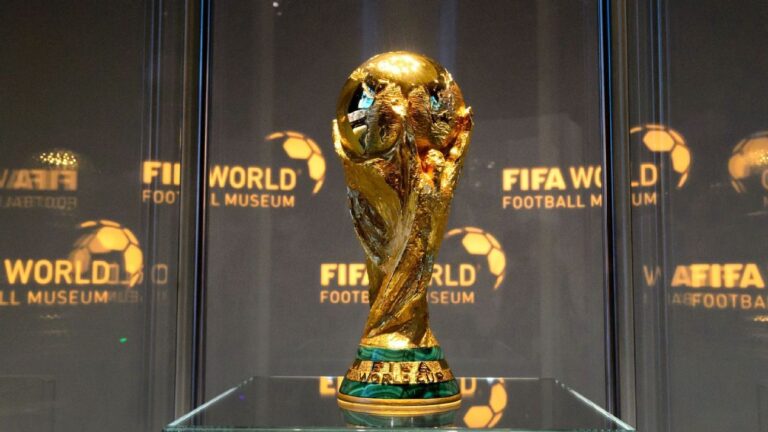
Five years before the 2030 World Cup, Morocco is intensifying its preparations as a co-host, alongside Spain and Portugal.
The country is pursuing an ambitious investment policy in its sports infrastructure, praised this week by a report in the French daily L’Équipe, which highlights the anchoring of football in Moroccan
public policy.
The strategic shift began after the Atlas Lions’ historic run to the semi-finals of the 2022 World Cup, now seen as a catalyst for a national vision of football as a lever for modernisation, social cohesion, and international influence.
At the center of this strategy is the Mohammed VI Football Complex, located near Salé. Inaugurated in 2019 and built for approximately €60 million, this 35-hectare facility is now considered one of the most modern technical centers in the world.
According to Fouzi Lekjaa, president of the Royal Moroccan Football Federation (FRMF), the complex hosts all 25 Moroccan national teams, across all disciplines.
It includes 11 pitches, five hotels, an Olympic-sized swimming pool, a mosque, a state-of-the-art medical center, and regularly hosts CAF training sessions as well as seminars for African federations.
“This has reduced logistical costs and optimized coordination between the teams,” Lekjaa explained to L’Equipe. The project has now been fully amortised, according to him.
The Ibn Batouta Stadium in Tangier, inaugurated in 2011, is also undergoing a major modernisation program. Its capacity will increase from 45,000 to over 62,000 seats, with modern hospitality boxes and a brand new 55,000 m² roof, the second largest in the world after that of the Maracanã in Rio de Janeiro.
The Moroccan government has allocated a budget of €340 million for these renovations, with a view
to ensuring long-term legacy.
Before the major event in 2030, Morocco is preparing to host two Africa Cup of Nations: The women’s AfCON, which begins on Saturday, and the men’s AfCON, scheduled for December 2025 and January 2026.
These two tournaments will serve as dress rehearsals to test the country’s logistical, operational, and security capabilities.
With these massive investments and a strategy clearly focused on performance, sports diplomacy, and regional influence, the kingdom intends to make the 2030 World Cup not only a sporting success, but also a showcase of modern Morocco, at the crossroads of football, innovation, and
transcontinental cooperation.
FIFA departments are also expected to establish offices there in the near future.
MK/ac/Sf/fss/as/APA