



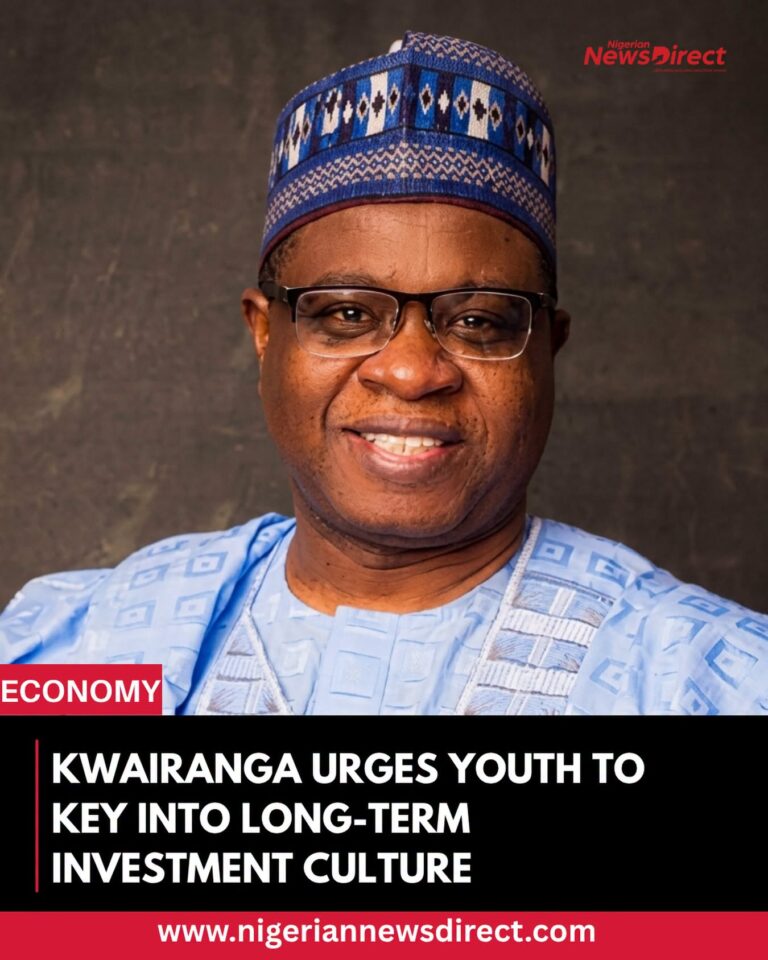
The Chairman of Nigerian Exchange Group (NGX), Dr. Umaru Kwairanga, says that the NGX is committed to building a market ecosystem that supports companies at every stage of growth through improved access to capital, enhanced disclosure standards and stronger investor protection frameworks.
Speaking at the 2026 PEARL Awards Corporate Summit in Lagos, Kwairanga noted that recent developments in the market underscore the growing role of capital markets in advancing national economic priorities through equity fundraising and debt issuances that support business expansion.
He called for deeper policy reforms, stronger institutions and improved corporate governance to enhance Nigeria’s long-term economic competitiveness.
According to him, Nigeria’s economic transformation depends on the quality of its policy environment, institutional resilience and the ability of businesses to adapt to rapid global changes.
Addressing the summit’s theme, “Policy Reforms and Corporate Competitiveness: Navigating Towards a Sustainable Edge,” he said that it was particularly relevant amid shifting global capital flows, technological disruption and increasing competition.
He assured that the capital market remains central to Nigeria’s development by mobilising investment, supporting business growth and facilitating wealth creation.
The NGX chairman, however, stressed that access to capital alone is insufficient to guarantee sustainable competitiveness.
“The competitiveness of any economy is determined not only by capital availability but also by the effectiveness of its policy environment and the ability of institutions to support business growth,” he said.
Kwairanga advocated targeted reforms, including fiscal incentives for listed companies, arguing that quoted firms already uphold high standards of transparency, governance and tax compliance and should be rewarded accordingly.
He also called for stricter enforcement of local content policies to ensure public procurement prioritises locally produced goods and services, thereby strengthening domestic industries and creating jobs.
Earlier in his keynote address, a Nigerian economist, Bismarck Rewane, stated that policy reforms remain the foundation of economic transformation but must translate into measurable improvements in productivity, employment and living standards.
Rewane noted that reforms create the enabling environment for investment, citing countries such as Singapore, Norway, China, and the United Arab Emirates as examples where consistent policy implementation has delivered long-term prosperity.
He added that Nigeria has undertaken several major reforms over the years, including banking consolidation, telecommunications liberalisation, pension reforms, capital market restructuring, fuel subsidy removal and foreign exchange reforms.
GIK/APA