



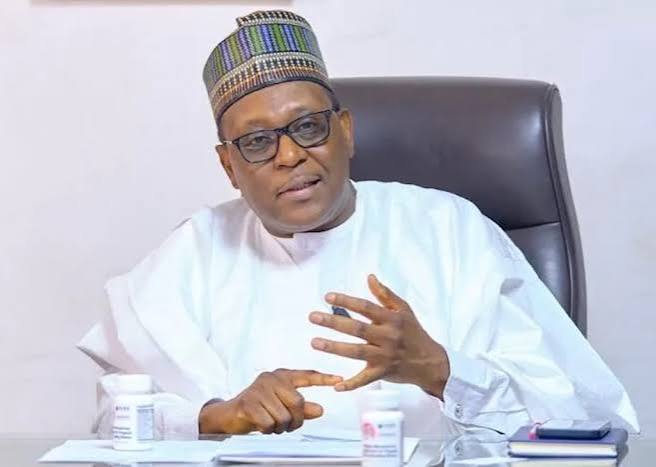
Nigeria’s Coordinating Minister of Health and Social Welfare, Prof. Muhammad Pate, has urged state governments and Nigerians to strengthen domestic health financing, saying sustainable healthcare delivery cannot depend on foreign taxpayers.
Speaking at the opening of the 2026 Joint Annual Review (JAR) in Abuja on Tuesday, Prof. Pate said that increased domestic resource mobilisation was essential to sustaining gains from ongoing health sector reforms and reducing dependence on external assistance.
“The illusion that you can have a healthy country on somebody else’s taxpayer, I think we should put it behind us.
“The only way forward is to mobilise, produce, execute domestic financing, and that is still work ahead for us,” he said.
He said that the Federal Government of Nigeria was working to increase domestic health financing and that the memorandum of understanding with the United States government committed Nigeria to strengthening local funding.
According to him, the commitment is aimed at reducing the country’s dependence on external assistance by 2030.
Pate said that legislative measures, including increasing the Basic Health Care Provision Fund (BHCPF) allocation to 2 per cent and reforms to sugar-sweetened beverage excise taxes, would expand available resources.
He said that the reforms, initiated under President Bola Tinubu’s Renewed Hope Agenda, were designed to address longstanding challenges of inadequate financing, fragmented governance and poor coordination.
Others included the unequal distribution of health workers and weaknesses in healthcare delivery, he said.
Pate said that the government had adopted a national health systems approach, working with state and local governments, development partners and other stakeholders to align resources and priorities.
According to him, the approach is anchored on four pillars: strengthening governance, improving population health outcomes, unlocking healthcare value chains and strengthening health security and resilience.
On financing, Pate said that N249 billion had been disbursed to states through the four BHCPF gateways between 2023 and the third quarter of 2026.
He compared this with N74 billion cumulatively disbursed to primary healthcare facilities through direct facility financing in the 10 years preceding the administration.
On healthcare manufacturing, he said that 10 factories or production lines had been commissioned, while pharmaceutical manufacturers received N24 billion in tax waivers between 2025 and 2026.
He added that 12 technology transfer agreements had been secured, with prospective investments valued at over $5 billion.
“Medipool is in place, which is the group purchasing organisation for the first time, not only here in Nigeria, but on the continent, that you have a major group purchasing organisation to mobilise and organise demand for what the federal government will buy,” he said.
On health security, Pate cited Nigeria’s response to the imported Ebola case as an example of the importance of preparedness and coordinated action.
He said that the response by the Nigeria Centre for Disease Control and Prevention (NCDC), its incident management system and partners helped contain the case and prevent further transmission.
The minister, however, identified inadequate and unevenly distributed health workers, quality of care and financing as outstanding challenges requiring attention.
He said that the government was working with professional associations to improve incentives for health workers, including remuneration, infrastructure and other working conditions.
Pate also said that modernising federal tertiary hospitals, expanding health insurance coverage and accelerating digital transformation, including artificial intelligence applications, would feature in the next phase of reforms.
GIK/APA