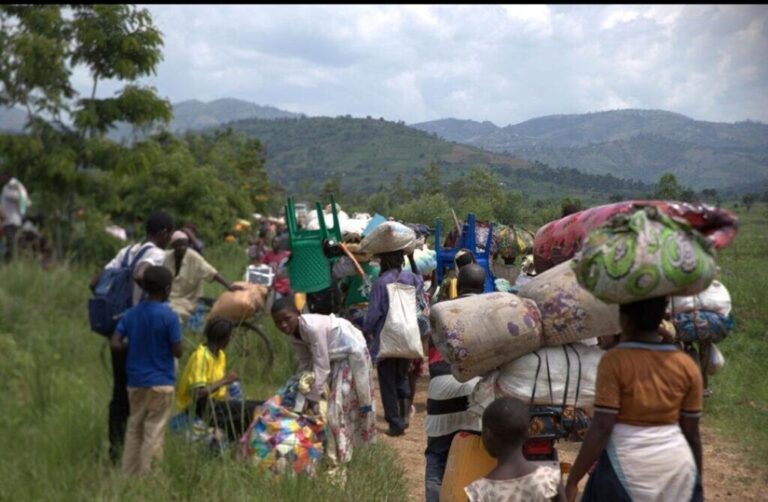
The rapidly deteriorating security situation in the Congolese province of South Kivu is causing massive population displacements.
Since December 5, Burundi, a neighbouring country of the Democratic Republic of Congo (DRC), has received more than 100,000 Congolese refugees and Burundian returnees, according to United
Nations humanitarian agencies.
According to the United Nations High Commissioner for Refugees (UNHCR), the influx of civilians fleeing armed violence in eastern DRC has intensified in recent weeks, particularly from the areas of
Kamanyola, Luvungi, Katogota, and Uvira.
More than 101,000 people have been registered at the entry points of Buganda, Gatumba, and Rumonge since December 5.
These arrivals include more than 90,000 Congolese refugees and approximately 11,000 Burundians previously residing in the DRC.
Faced with this humanitarian pressure, more than 62,000 people have been transferred from border areas to the Busum reception centre.
UNHCR emphasises that the security situation remains “severely deteriorated” and calls for urgent mobilization to strengthen registration and assistance to displaced populations, as displacement
continues.
For its part, the UN Office for the Coordination of Humanitarian Affairs (OCHA) indicates that, despite the announcement of the M23 armed group’s withdrawal from Uvira on December 17, insecurity remains “extremely precarious” in the city and its surroundings, as well as along the Uvira-Fizi axis.
Since the beginning of December, the ongoing violence has led to the displacement of approximately 500,000 people in the territories of Uvira, Fizi, and Kalehe, as well as in some areas of Tanganyika.
These populations live in precarious conditions, housed in schools, churches, overcrowded sites, or within already fragile host communities.
OCHA also reports looting of health and education facilities, severely compromising access to healthcare and education.
At the same time, a resurgence of cholera cases is worsening the humanitarian situation. Between December 14 and 21, at least 409 new cases, including eight deaths, were recorded, mainly in the health zones of Ruzizi, Fizi, Nundu, and Lemera.
Response capacity remains very limited due to a lack of medicines, logistical constraints, and persistent insecurity hindering humanitarian access.
The province of South Kivu, in eastern DRC, is regularly affected by armed violence involving various groups, causing massive population displacements and a chronic humanitarian crisis.
Access restrictions, insecurity and weak health infrastructure complicate the humanitarian response, while neighbouring countries, including Burundi, continue to face a growing influx of refugees.
DM/ac/fss/as/APA