





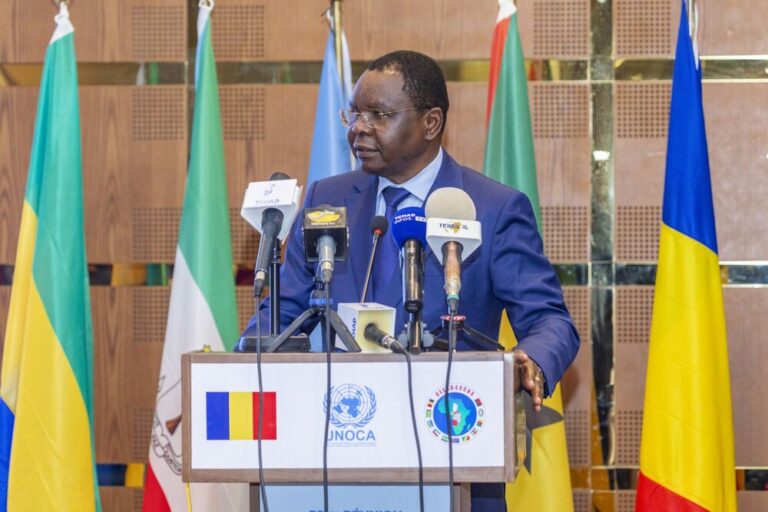
Prime Minister Allahmaye Halina was questioned on Monday, March 16, by Senator Abderaman Koulamallah in the Senate on the issue of national cohesion and peaceful coexistence in Chad.
A country weakened by multiple politico-military and ethnic crises, Chad faces recurring conflicts that threaten national unity. In 2025, several intercommunal clashes over natural resources claimed hundreds of lives, while tribal hate speech and ethnic prejudice continued to spread across social media platforms.
Responding to the senator’s questions on national cohesion, the PM laid out a multi-pronged argument and began by reaffirming that national cohesion is the cornerstone of his government’s action, while stressing that this responsibility falls on every citizen.
“National cohesion is everyone’s business. It rests on administrative, judicial and security authorities, but every individual, every gesture and every word matters,” he said.
The head of government then outlined the measures put in place to promote national unity. On the administrative front, the authority of heads of administrative units and local executives has been strengthened, while the rehabilitation of the Republic’s Mediation Office aims to enable faster and more proactive management of local tensions.
On the security front, nationwide disarmament operations are ongoing, with close to 4,000 weapons of war seized to date. On the judicial front, several individuals implicated in deadly conflicts have been convicted, while others are awaiting trial.
To counter hate speech circulating on social media, reforms have been undertaken within the National Agency for Information Systems Security and Electronic Certification, as well as within the High Authority for Audiovisual Media.
To build lasting national cohesion, Chad has launched a National Social Cohesion Strategy for 2024-2029, developed with the support of the United Nations Development Programme (UNDP) and the Mediation Office. The strategy aims to strengthen the rule of law, guarantee equitable access to public services, promote inclusive dialogue between communities and prevent conflict through proactive mediation mechanisms.
The prime minister closed his remarks with a message of reassurance to the effect that: “The government will continue to act with firmness and dialogue, so that our diversity becomes a strength and never a fault line.”
CA/te/sf/lb/as/APA