





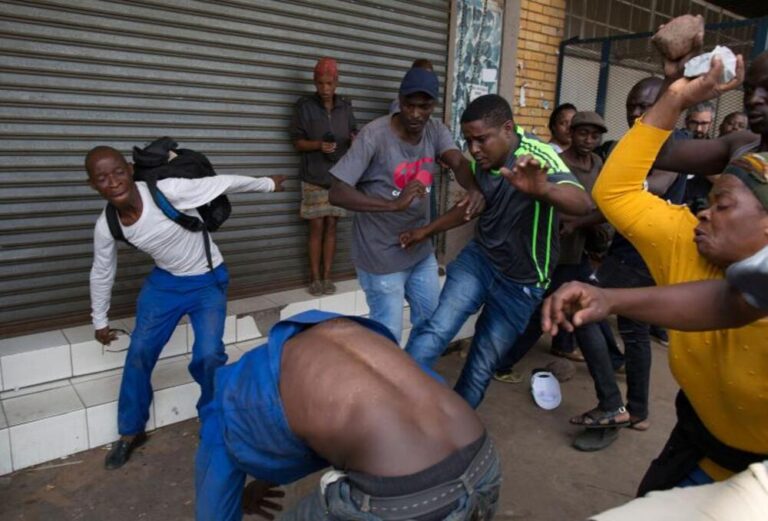
In response to the ongoing xenophobic violence in South Africa, the Gorée Institute is calling on the
African Union, the Southern African Development Community (SADC), and international organisations to strengthen mechanisms for prevention, human rights protection, and combating hate speech.
The prestigious Pan African institute called for a continental mobilisation in response to the rise in xenophobic violence in South Africa, stating that the situation requires a coordinated response from African and
international institutions.
In a statement published on July 28, 2026, the Dakar-based organisation condemned “in the strongest possible terms”, all forms of xenophobic violence, discrimination, hate speech, and incitement to violence.
It urged South African authorities to guarantee “without delay” the effective protection of all people living within
their territory, to uphold the rule of law, and to prosecute the perpetrators, instigators, and accomplices of the violence.
The institute also called on political leaders, opinion leaders, traditional authorities, the media, and digital platforms to adopt a responsible approach and avoid any rhetoric that could fuel hatred, disinformation, or social division.
“Human dignity, equality before the law, and the protection of fundamental rights are universal principles that cannot be subordinated to identity, ethnic, or political considerations,” the organisation stresses.
Given the gravity of the situation, the Institute calls on the Southern African Development Community (SADC), the African Union (AU), the African Commission on Human and Peoples’ Rights, the United Nations, and international partners to fully exercise their responsibilities in conflict prevention, preventive diplomacy, and the protection of human rights.
Among the proposed measures are the deployment of independent monitoring and early warning mechanisms, the initiation of a high-level political dialogue with Pretoria, the strengthening of protections for refugees and asylum seekers, and support for civil society organizations engaged in social cohesion and intercultural dialogue.
The Gorée Institute notes that South Africa holds a special place in African collective memory due to its history of struggle against apartheid, oppression, and exclusion.
According to the institute, this legacy now places a particular responsibility on the country in building a society founded on “justice, diversity, equality, and respect for the dignity of every human being.”
“Africa’s future cannot be built on fear of the other, rejection of foreigners, or the fragmentation of African solidarity,” the Institute asserts, advocating for a renewed commitment to dialogue, democracy, peace, and Pan-Africanism. Based on the legacy of the historic 1987 Dakar conference, held on Gorée Island with representatives of the then-exiled African National Congress (ANC) and progressive Afrikaners, the Gorée Institute presents itself as a pan-African centre dedicated to democracy, human rights, inclusive governance and conflict prevention in Africa.
AC/Sf/fss/as/APA