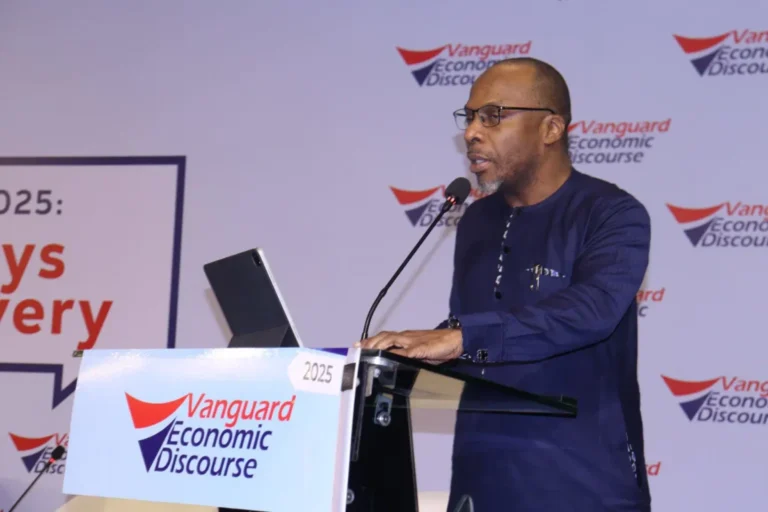
The Group Chief Economist, African Export-Import Bank (Afreximbank), Dr Yemi Kale, says Africa must strengthen regional trade and financial systems to drive industrialisation, deepen value chains and accelerate economic transformation.
Speaking at the 2026 Ecobank Nigeria’s Customer Forum on in Lagos, with the theme “Strengthening Regional Integration for Economic Transformation”, Kale, who was a former Statistician-General of Nigeria’s National Bureau of Statistics, warned that Africa’s trade future would be shaped not by volume but by structure.
“For decades, the continent exported raw commodities and imported finished goods.
“The real transformation begins when Africa processes what it produces and participates meaningfully in value chains,” he said.
Kale noted that over 70 per cent of exports remained primary commodities.
According to him, the African Continental Free Trade Area (AfCFTA) provided a historic opportunity but required financial architecture to succeed.
“Trade agreements do not move goods, finance does. Without efficient payments systems, trade finance and cross-border banking networks, integration will remain an aspiration,” he said.
He also highlighted the role of pan-African banks in enabling seamless transactions.
Kale identified infrastructure deficits, logistics costs and fragmented regulations as major barriers, warning that transport expenses in some African corridors accounted for up to 40 per cent of final goods prices.
“If it costs more to move goods within Africa than to ship them overseas, our competitiveness is structurally weakened,” he stated.
He also pointed to Africa’s demographic strength as a strategic advantage.
“By 2050, Africa will supply a quarter of the world’s workforce.
“If supported with infrastructure, skills and digital systems, this young population can transform the continent into a global manufacturing and consumer powerhouse,” he said.
On digital trade, Kale described technology as a shortcut to integration and that Africa’s future trade routes were not only roads and ports, there were platforms and payment systems.
He added that digital infrastructure reduced friction, lowered costs and empowered small businesses to trade across borders.
He urged African countries to shift from commodity dependence to value addition, citing opportunities in refining minerals, agro-processing and green industrialisation.
“The question is whether Africa will export lithium or manufacture batteries, export cocoa or produce chocolate. That decision will define the continent’s prosperity,” he said.
Kale emphasised that multipolar global trade dynamics present Africa with leverage to diversify partnerships and strengthen intra-continental commerce.
He, however, warned that fragmentation within Africa could undermine progress.
“The choice is clear: compete against one another or coordinate for collective bargaining power. Africa’s trade transformation hinges on decisive policy action.
“If Africa trades more with itself, finances its corridors, harmonises customs systems and speaks with one voice in global negotiations, it will move from the margins of global value chains to the centre of them,” he stated.
GIK/APA